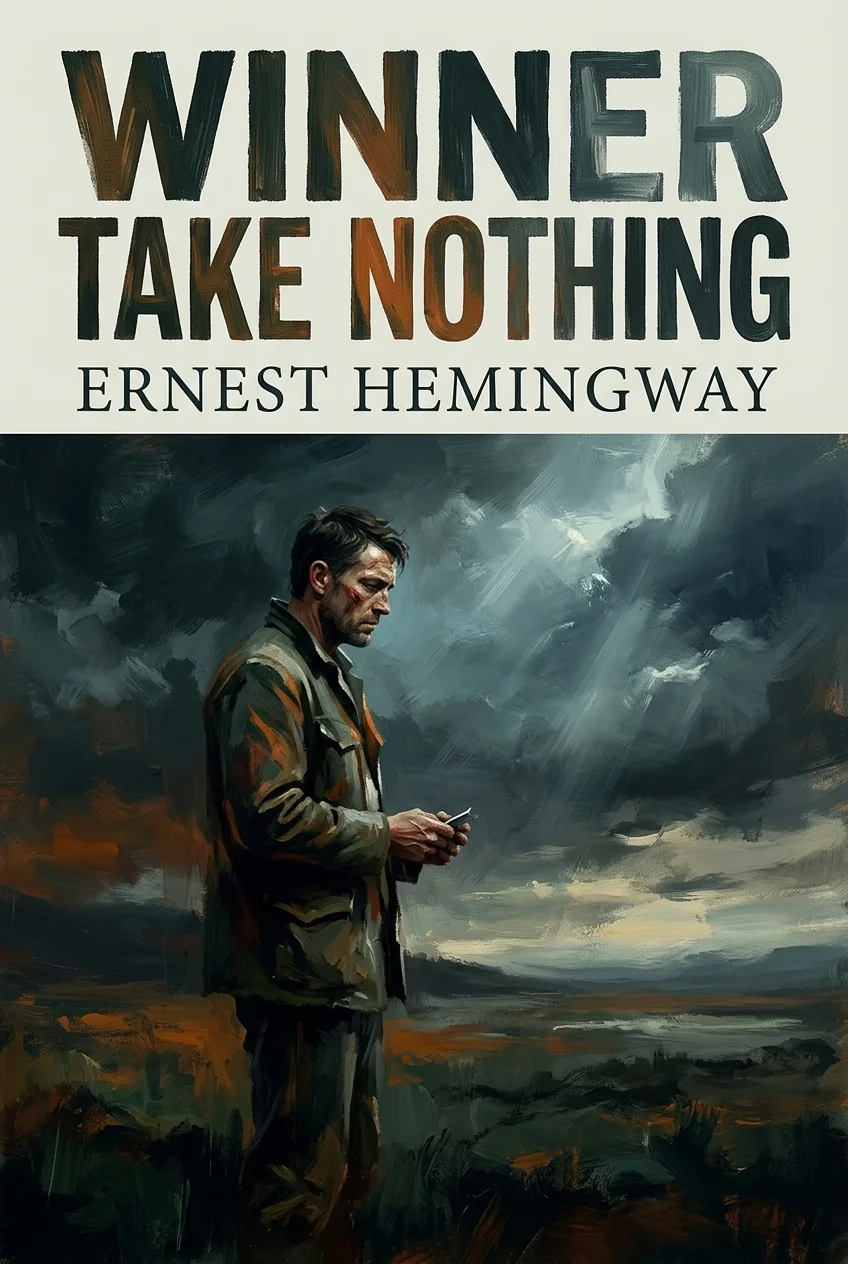
Winner Take Nothing
Ernest Hemingway’s powerful short-story collection, Winner Take Nothing, explores the hollow nature of victory and the quiet struggle against existential dread. Through iconic characters like Nick Adams, these stories delve into the physical and psychological scars of war, failed relationships, and the search for dignity in a chaotic world. Written in Hemingway's signature sparse, understated style, this masterpiece offers a raw, unsparing look at the human condition.
About the Author

More from this Author





More in Short Stories

White nights, and other stories

The Plattner Story and Others
The Clicking of Cuthbert

Here and Beyond

Short Stories of Dostoyevsky
The Sketchbook of Geoffrey Crayon, Gent.
The Man Upstairs and Other Stories
Tales of Space and Time

Twelve Stories and a Dream

Men Without Women
The Country of the Blind, and Other Stories
Tales of Men and Ghosts
Top Read This Month

The Green Eagle

The Adventures of Sherlock Holmes
King James Bible

The Thousand-Headed Man

Dispatches From the Ruhr
Beyond Good and Evil
The Bible | English Revised Version
The Life and Adventures of Robinson Crusoe
Darby Bible Translation

Religious Freedom: Between Theory and Reality