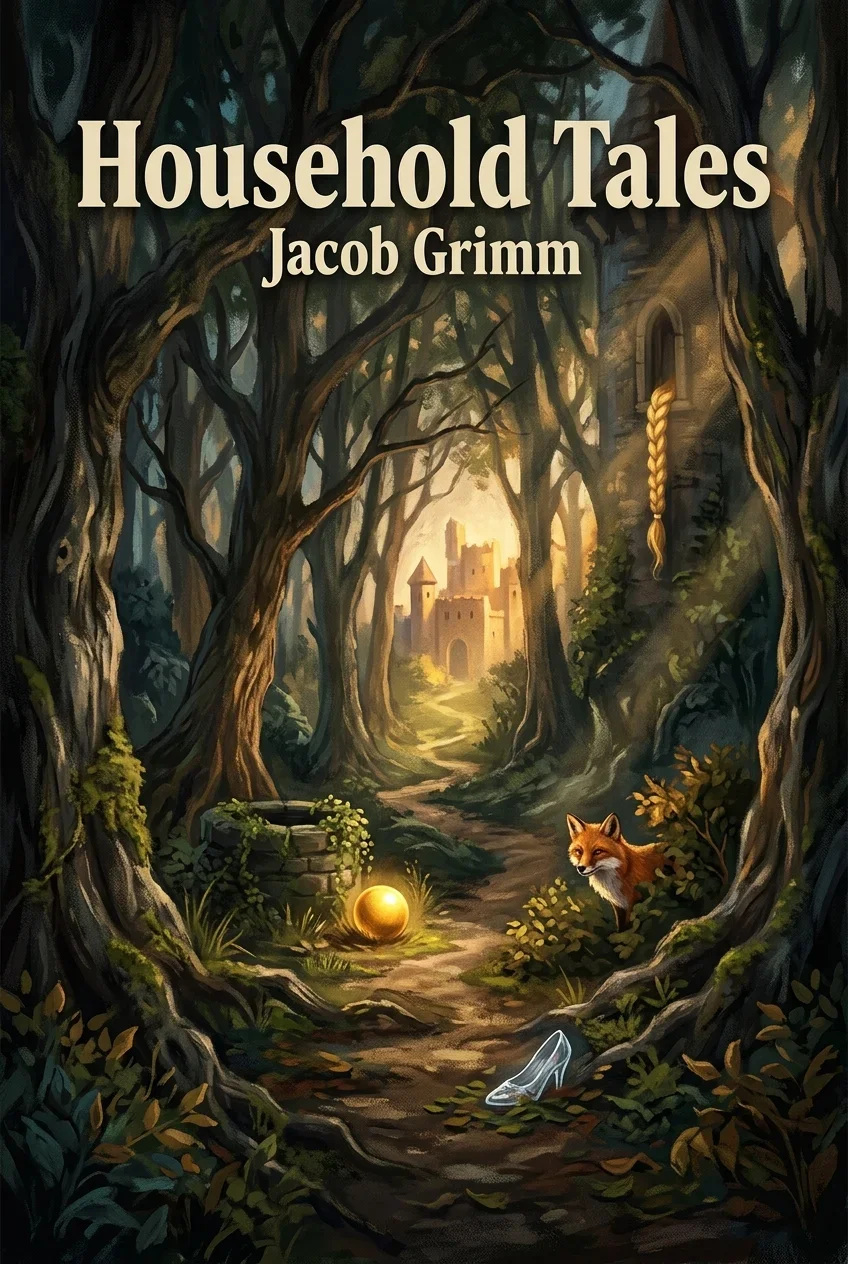
Household Tales
Jacob Grimm’s Household Tales is a foundational collection of European folklore, blending whimsical enchantment with stark moral lessons. From talking animals and magical transformations to the triumph of the virtuous over the wicked, these stories explore the power of fidelity, resourcefulness, and the harsh realities of a perilous world. Originally gathered from oral traditions, this timeless anthology captures the cultural anxieties and enduring values of a pre-industrial society.
About the Author

More from this Author



More in Short Stories
Certain People
The Sketchbook of Geoffrey Crayon, Gent.

White nights, and other stories
The Man Upstairs and Other Stories

The Man with Two Left Feet, and Other Stories

Here and Beyond

Twelve Stories and a Dream
Tales of Space and Time
The Door in the Wall and Other Stories

The Stolen Bacillus and Other Incidents

The Plattner Story and Others