Book Catalog
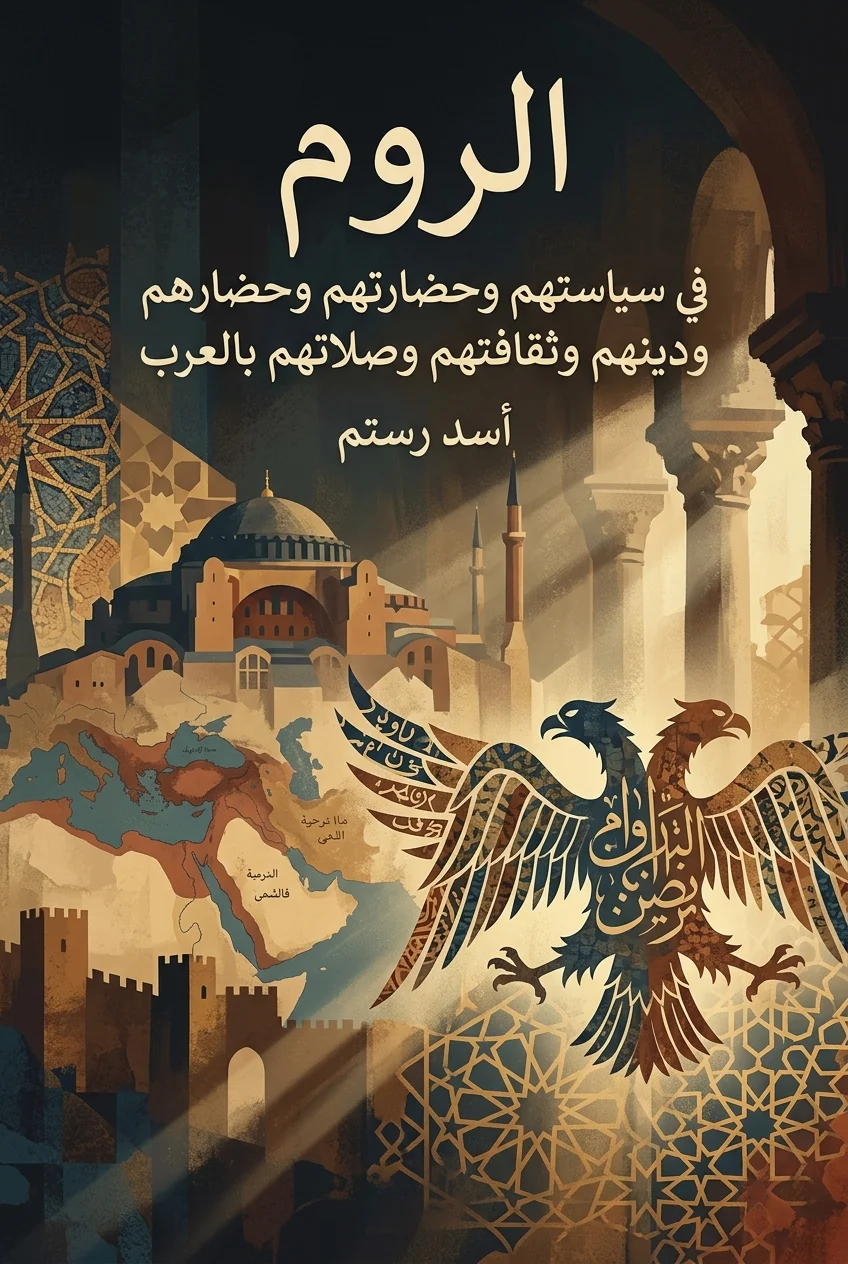
The Byzantines: Their Politics, Civilization, Religion, Culture, and Relations with the Arabs

The Byzantines: Their Politics, Civilization, Religion, Culture, and Relations with the Arabs

Asad Rustum

The Byzantines: Their Politics, Civilization, Religion, Culture, and Relations with the Arabs

Asad Rustum paints a majestic historical portrait of the Byzantine Empire, tracing the influence of the Romans in shaping the consciousness of the Arab East. The book navigates the intricacies of politics, law, and the evolution of the Church, unveiling the profound interplay between the civilization of Constantinople and the roots of Arab identity, both before and after the advent of Islam. With an elegant and scholarly style, the author brings to life the struggles of emperors, the debates of theologians, and the legacy of the Beirut School of Law, presenting the narrative of an empire that was no stranger to our land, but rather an integral partner in forging our ancient history.


Genre: History, Christian Orthodox
Language: Arabic
Publisher: Hindawi Foundation
Format: eBook, WebBook

Special thanks to the Hindawi Foundation for providing the electronic edition of this book to our platform.

Join Free

Start Reading

Sign up for free to access this book.

About the Author

Asad Rustum

Asad Rustum

1897 - 1965

Asad Rustum (1897–1965), a Lebanese national, was the "Historian of the See of Antioch" and guardian of the Mashriqi (Eastern) memory, who transformed historical writing in the Arab world from the "art of storytelling" to the "science of methodology." With sharp intellect and an investigative spirit, he did not merely narrate events but established the standard by which facts are weighed. He thus became a pioneer of the modern scientific school in Arab history and the founder of the "Critique of Sources" school, which accepts no report without scrutiny.

He received his education between Beirut and Chicago, combining deep cultural roots with the rigor of Western academic research. He believed that a historian is a "judge" who seeks truth behind a pile of documents, not merely a conveyor of news. Thanks to him, generations learned how to distinguish between flimsy narratives and conclusive documents, and how to write the history of peoples and laws with an objective vision that rejects bias and improvisation. The simplicity of his style and clarity of his methodology transformed history into a living subject that enlightens minds, rather than mere dry facts covered in dust.

Among his lasting works

  • Terminology of History: Considered the ethical and methodological constitution for every researcher in Arab history; in it, Rustum established strict rules for critiquing narratives and examining documents with precise scientific methodology.
  • The Church of the City of God, Great Antioch: A massive encyclopedia in three volumes chronicling the See of Antioch, revealing with emotional and historical depth the roots of Eastern Christianity and its development through the ages.
  • History of Greece: A solid reference that reviews the civilization of the Greeks, their philosophy, and their impact on humanity's journey, with a style that combines comprehensive vision and precise detail.
  • Arabic Sources for the History of Syria during the Era of Muhammad Ali Pasha: An important documentary collection that reflects his exceptional ability to interpret official documents and construct a coherent historical narrative for a pivotal period in the region's history.
  • History of the Arabs: A serious study that examines the origins of Arab identity and its civilizational paths, free from exaggerations and rhetorical flourish.
Read more about the author

More from this Author

More in History

Top Read This Month

Top Read All Time