1694 - 1778
François-Marie Arouet, known by his pen name Voltaire (1694–1778), was born in Paris and was a prominent French writer, philosopher, and historian of the Enlightenment era. Voltaire is considered one of the most influential figures in Western thought due to his staunch defense of civil liberties, freedom of belief, and freedom of expression, and his fight against religious intolerance and social injustice. He was distinguished by his satirical and profound literary style, which he used to criticize the traditional institutions of his time, making him a global symbol of freedom of thought.
Voltaire received his education at a Jesuit school in Paris, but he soon rebelled against prevailing traditions, leading to his imprisonment in the Bastille in 1717 for his satirical writings. After his exile to England in 1726, he spent three years there, during which he was influenced by the British political system and the ideas of philosophers such as John Locke and Isaac Newton. This exposure to English culture inspired him to write "Philosophical Letters" in 1734, a work in which he criticized the French system and solidified his position as a leader of the Enlightenment movement.
Voltaire traveled between several European royal courts, including his stay in Prussia at the invitation of King Frederick the Great, before settling in the town of Ferney on the Franco-Swiss border in the 1750s. In Ferney, his château became a pilgrimage site for intellectuals from all over Europe, and he continued to write his plays and philosophical novels that attacked ignorance and superstition until his death in Paris in 1778. These diverse experiences and continuous exile refined his critical and satirical outlook and made his writings an effective intellectual weapon against tyranny.
Key Works
- Micromégas and Three Stories (1752): A short philosophical novel, a masterpiece of early science fiction, that uses the journey of a giant alien to criticize human vanity and intellectual intolerance.
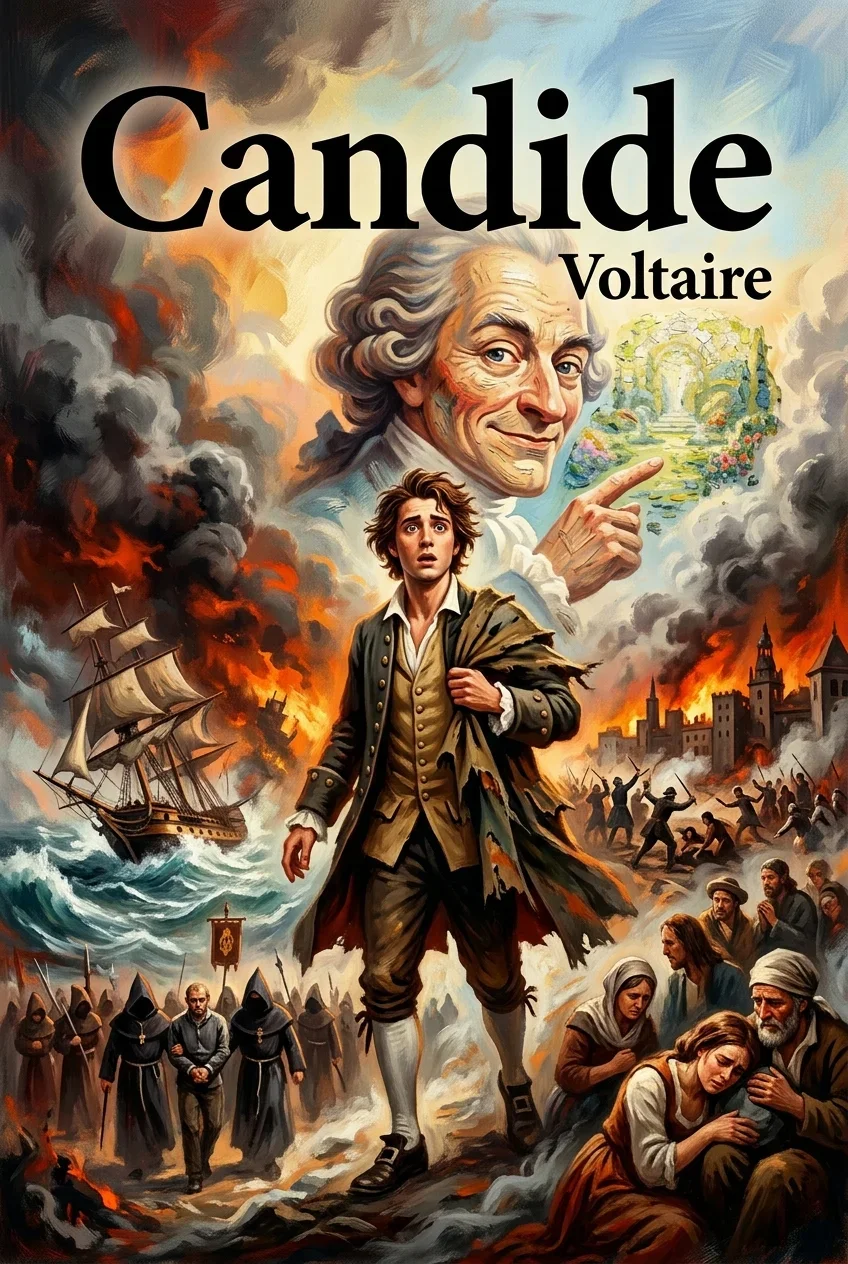
- Candide (1759): A satirical philosophical novel that follows the adventures of a naive young man who confronts the world's catastrophes to refute the theory of absolute optimism and advocate for realistic action.
- A Treatise on Tolerance (1763): An eloquent philosophical essay advocating for the acceptance of others and freedom of belief, condemning religious persecution and unjust trials in France.