1903 - 1950
Eric Arthur Blair (b. 1903), who wrote under the pen name George Orwell, was an English novelist, essayist, and journalist widely regarded as one of the most influential political writers of the twentieth century. His work was defined by its sharp social criticism, fierce opposition to totalitarianism, and steadfast commitment to democratic socialism. Through his clear, precise prose, he created some of the most enduring political concepts and vocabulary in the English language.
Born in India and educated at Eton College, Blair joined the Indian Imperial Police in Burma in 1922, an experience that sparked his lifelong hatred of imperialism. After resigning in 1927, he spent years living in poverty in Paris and London, working as a dishwasher and living among the homeless to understand the struggles of the working class. These formative years directly inspired his early investigative journalism and shaped his deeply empathetic, politically charged worldview.
In 1936, Blair traveled to Spain to report on the Spanish Civil War but instead joined the republican militia to fight against Fascism. He was seriously wounded in combat and narrowly escaped the country during a purge of his political faction, an experience that permanently cemented his hostility toward Soviet-style totalitarianism. This harrowing ordeal and his disillusionment with communist tactics became the driving forces behind his most famous allegorical and dystopian masterpieces.
Essential Reading
- Homage to Catalonia (1938): A deeply personal memoir detailing the author's firsthand experiences fighting against fascism on the front lines of the Spanish Civil War.
- Animal Farm (1945): A brilliant satirical allegory that uses a group of rebellious farm animals to expose the corruption and tyranny of the Russian Revolution and Soviet totalitarianism.
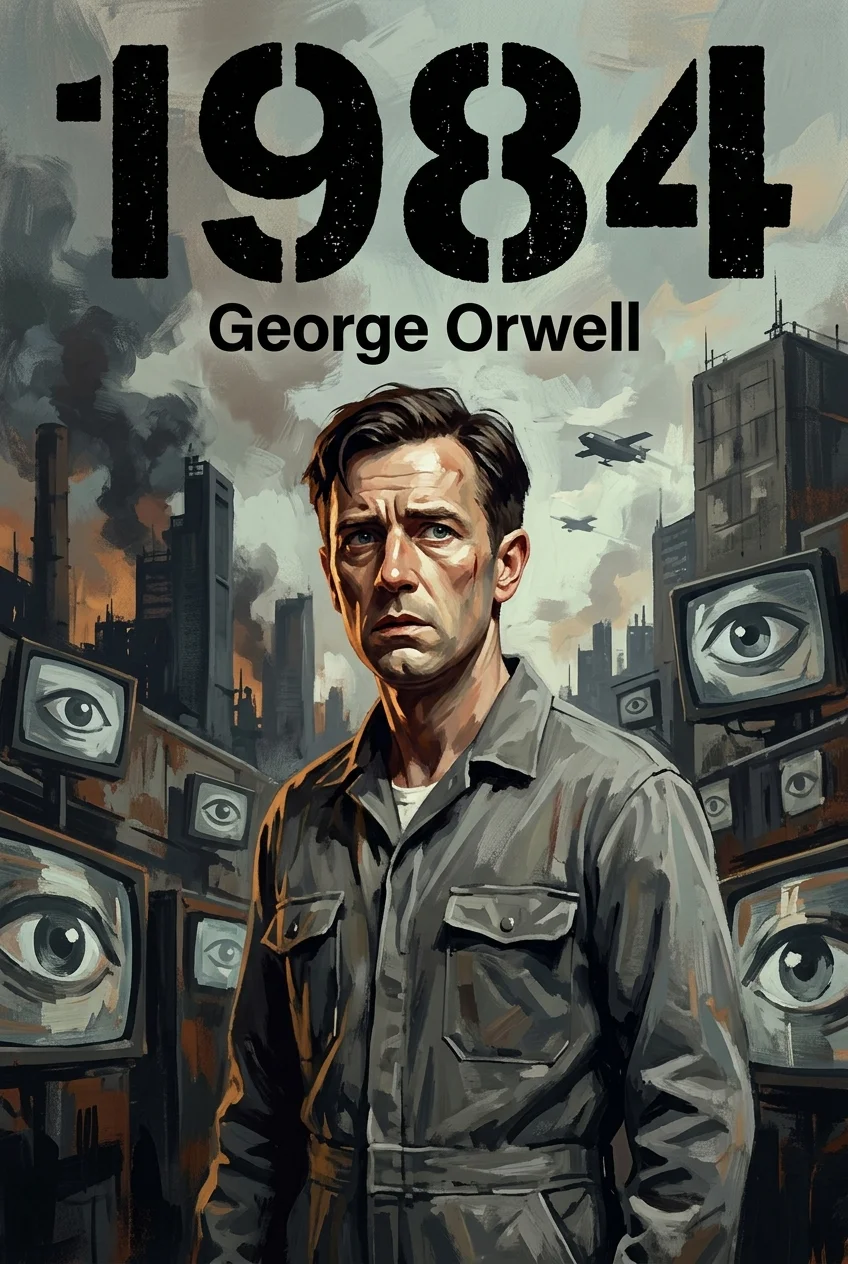
- Nineteen Eighty-Four (1949): A terrifyingly prophetic dystopian novel that warns against the dangers of government surveillance, propaganda, and the absolute abuse of state power.