Book Catalog
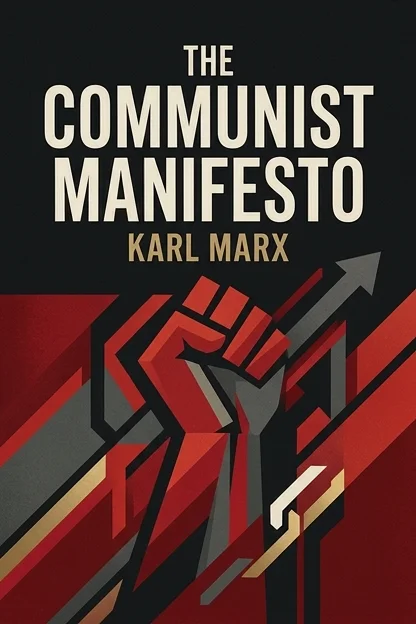
The Communist Manifesto

The Communist Manifesto

Karl Marx

A landmark of political theory, The Communist Manifesto is Karl Marx’s searing indictment of capitalism and a visionary call for social revolution. This influential text explores historical materialism, the struggle between the bourgeoisie and the proletariat, and the inevitable rise of a classless society. From its analysis of globalization to the abolition of private property, Marx provides a profound critique of the forces shaping our world. Essential for students of history and politics.

Genre: Politics & Current Affairs
Language: English
Format: eBook, WebBook
Join Free

Start Reading

Sign up for free to access this book.

About the Author

Karl Marx

Karl Marx

1818 - 1883

Karl Marx (1818–1883) was a German philosopher, political economist, and revolutionary socialist whose fierce critique of capitalism fundamentally altered the course of global history. Working closely with his lifelong collaborator Friedrich Engels, Marx analyzed the inherent flaws and class struggles he believed would ultimately dictate the collapse of capitalist societies. He argued that the modern world was deeply divided between the bourgeoisie, who controlled the means of production, and the proletariat, the working class whose labor was actively exploited for profit.

Forced into permanent exile due to his radical political publications, Marx spent much of his adult life living in poverty in London. He spent his days reading extensively in the British Museum and writing the dense, foundational texts of Marxist theory. While his ideas provoked intense hostility during his lifetime, his sociopolitical frameworks eventually sparked massive revolutions, shaped global labor movements, and laid the ideological groundwork for the major geopolitical conflicts of the 20th century.

Essential Reading

  • The Communist Manifesto (1848): Co-authored with Engels, this brief, explosive political pamphlet outlines the core theory of class struggle and serves as the founding document of the communist movement.
  • Das Kapital (1867): His magnum opus, a rigorously researched and highly influential critique of political economy that meticulously dissects the mechanics and historical trajectory of the capitalist system.

The German Ideology (written 1846, published 1932): A crucial early philosophical work, also co-authored with Engels, that first articulates their materialist conception of history.

  • The Eighteenth Brumaire of Louis Bonaparte (1852): A sharp, deeply analytical essay examining the 1851 French coup d'état, featuring his famous observation that major historical events occur twice: "the first time as tragedy, the second time as farce."
Read more about the author

More in Politics & Current Affairs
Top Read This Month
Top Read All Time