Book Catalog
Nicomachean Ethics

Nicomachean Ethics

Aristotle

In the Nicomachean Ethics, Aristotle explores the ultimate goal of human life: happiness (eudaimonia). Rather than a passive state, true happiness is presented as an active life lived in accordance with reason and virtue. Moving systematically through the nature of moral and intellectual virtues, this foundational work bridges biology, psychology, and politics, demonstrating how individuals can cultivate character and how society can foster the ultimate human good.

Genre: Philosophy
Language: English
Format: eBook, WebBook
Join Free

Start Reading

Sign up for free to access this book.

About the Author

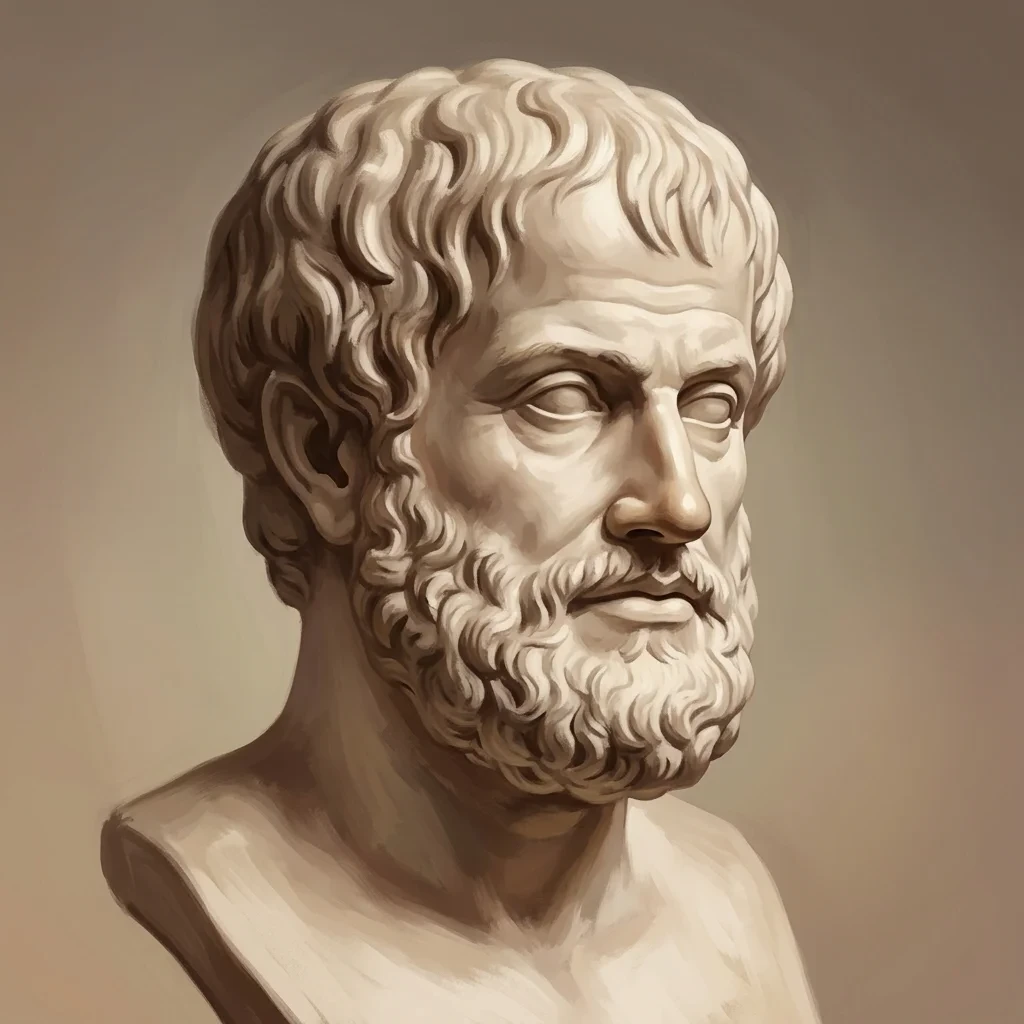
Aristotle

Aristotle

-384 - -322

Aristotle (384–322 BC) was an ancient Greek philosopher and polymath who stands as one of the most influential figures in Western intellectual history. As the founder of the Lyceum and the Peripatetic school of philosophy, his pioneering work laid the groundwork for formal logic, natural sciences, ethics, and political theory. His systematic approach to empirical inquiry revolutionized how humanity categorizes and understands the natural and social world.

Born in Stagira, Chalcidice, Aristotle moved to Athens at the age of seventeen to study at Plato's Academy, where he remained for twenty years as a brilliant student and teacher. Following Plato's death, he left Athens and eventually served as the tutor to Alexander the Great in Macedon starting around 343 BC. This prestigious relationship with the Macedonian court secured him political patronage and deeply influenced his later empirical studies of diverse political systems.

Upon returning to Athens in 335 BC, Aristotle established his own school, the Lyceum, where he conducted extensive research and wrote his most influential treatises. He built a vast library and gathered a community of scholars, but was forced to flee to Chalcis in 323 BC due to rising anti-Macedonian sentiment following Alexander's death. He died there in 322 BC, leaving behind a massive corpus of work that would go on to shape medieval Islamic and Christian scholarship for centuries.

Essential Reading

  • The Constitution of the Athenians (c. 330 BC): This critical historical text, also known as Nizam Al-Atiniyin, describes the political system of ancient Athens and details the development of its democratic institutions.
  • Nicomachean Ethics (c. 340 BC): This foundational work of moral philosophy explores the concept of the good life and argues that human happiness is achieved through the cultivation of virtue.
  • Politics (c. 350 BC): This influential treatise examines the nature of the state, citizenship, and different forms of government to determine the ideal structure for a political community.
Read more about the author

More in Philosophy

Top Read This Month

Top Read All Time