Book Catalog
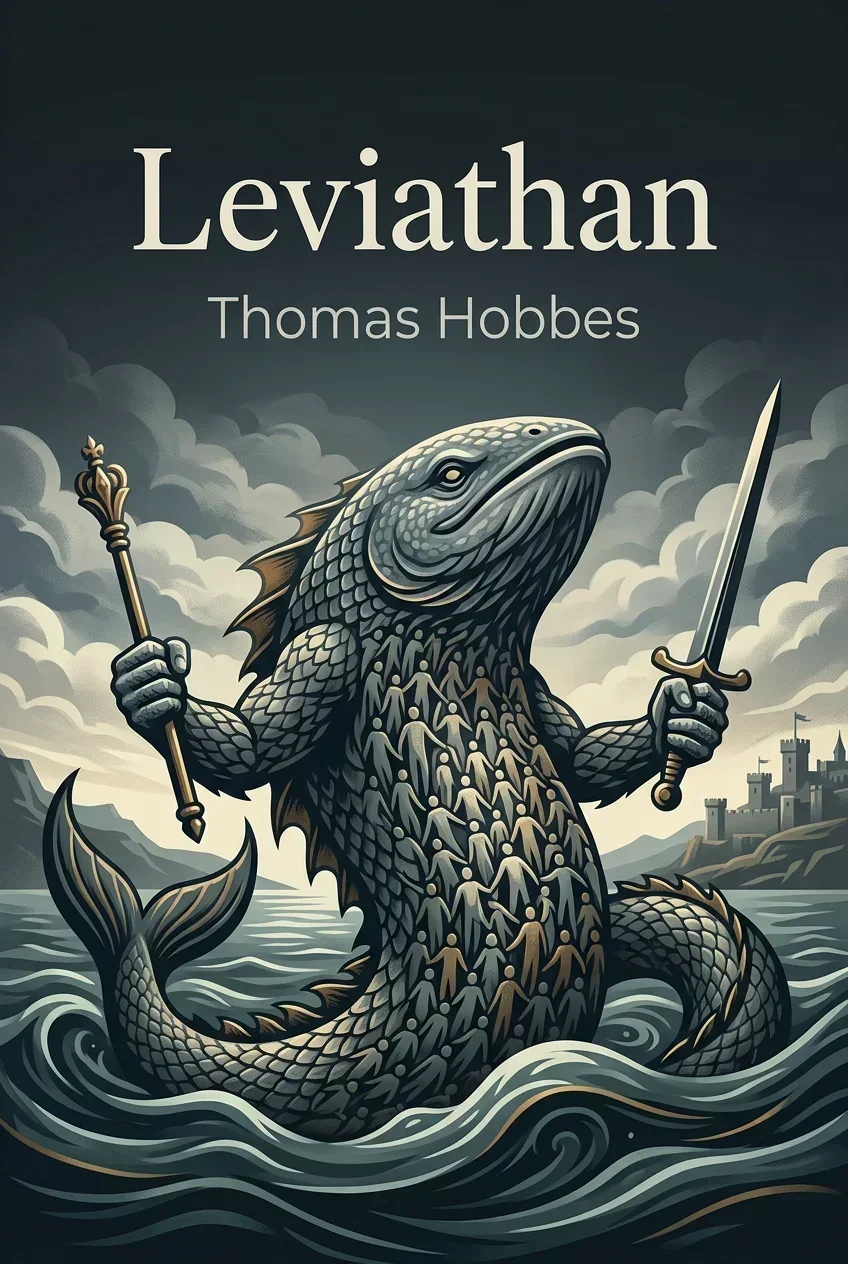
Leviathan

Leviathan

Thomas Hobbes

Thomas Hobbes’s Leviathan is a foundational masterpiece of political philosophy that reimagines the state as an "Artificial Man" built for collective security. Stripping away divine right, Hobbes employs a mechanical, materialist lens to analyze human nature, language, and the social contract. From the origins of sense to the necessity of a sovereign power, this rigorous work offers a secular, rationalist framework for social order, essential for any student of power, law, and governance.

Genre: Philosophy, Politics & Current Affairs, Non-Fiction
Language: English
Format: eBook, WebBook
Join Free

Start Reading

Sign up for free to access this book.

About the Author

Thomas Hobbes

Thomas Hobbes

1588 - 1679

Thomas Hobbes (1588–1679) was an English philosopher whose deeply cynical, rigorously logical view of human nature permanently altered the landscape of Western political thought. Born prematurely in the year the Spanish Armada set sail to attack England, Hobbes later famously quipped that his mother had "given birth to twins: myself and fear." This intense preoccupation with security and survival was only amplified by the bloody chaos of the English Civil War. Observing the collapse of society around him, Hobbes concluded that humans in a natural, ungoverned state were inherently selfish and violent, leading to an existence that was inevitably "solitary, poor, nasty, brutish, and short."

To escape this perpetual state of war, Hobbes argued that individuals must willingly surrender their absolute freedoms to a supreme, undivided authority. This concept of the "social contract" argued that citizens owe their obedience to a powerful sovereign—which he named the Leviathan—in exchange for civil peace and physical protection. While his unapologetic defense of absolute power made him deeply unpopular with both parliamentarians and royalists during his own lifetime, his unsentimental, thoroughly secular approach to human behavior laid the inescapable foundation for modern political science.

Essential Reading

  • Leviathan (1651): His towering, highly controversial masterpiece arguing that only a strong, undivided government can prevent the terrifying chaos of the natural human condition.
  • De Cive (On the Citizen) (1642): A sharp, foundational text exploring the complex relationship between human nature, religious doctrine, and the absolute necessity of state power.

Behemoth (written 1668, published 1681): His highly opinionated, heavily censored historical account of the English Civil War, meticulously tracing the political and religious fractures that led to the social collapse he so deeply feared.

  • De Corpore (On the Body) (1655): A deep dive into his overarching materialist philosophy, attempting to explain the entire physical world—and human psychology—through the strict, observable mechanics of motion.
Read more about the author

More in Philosophy

Top Read This Month

Top Read All Time