Book Catalog
Men Like Gods

Men Like Gods

H. G. Wells

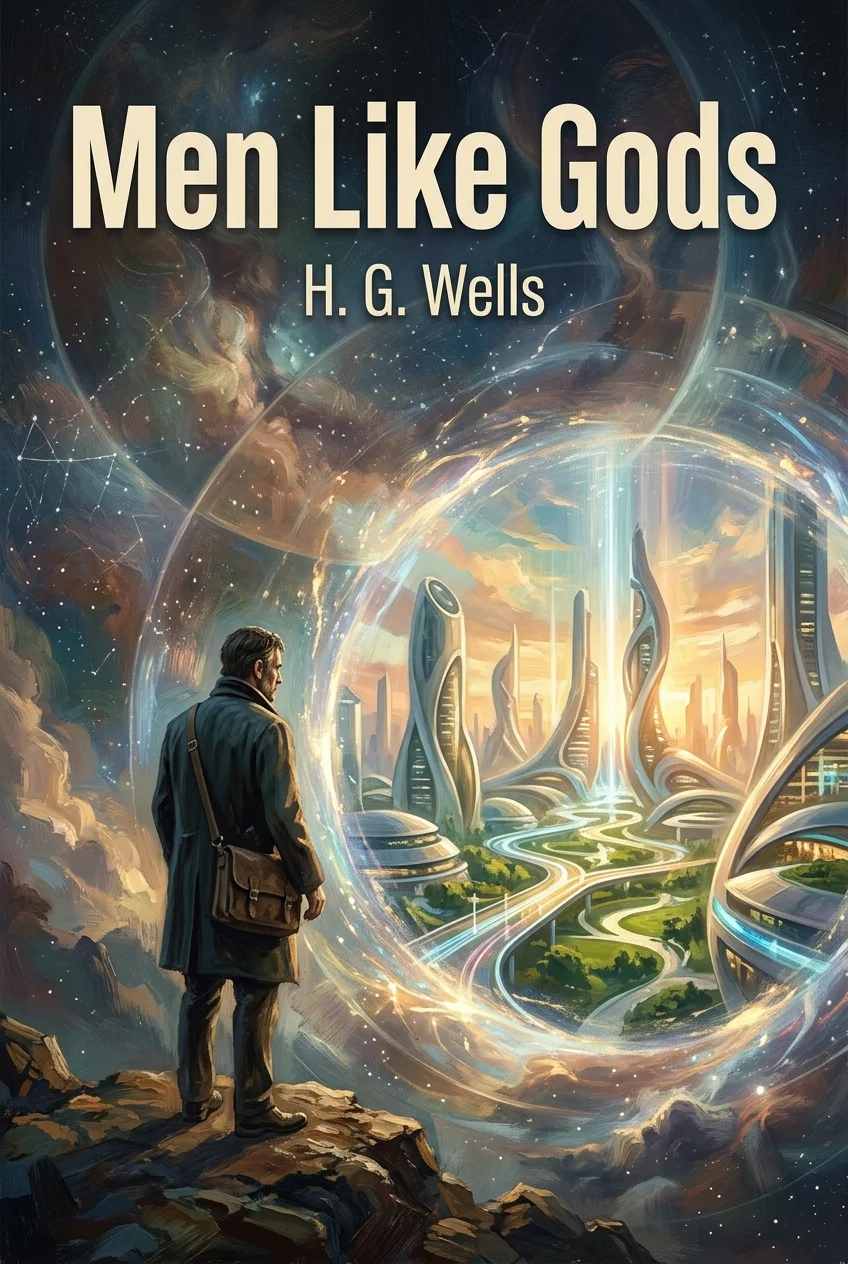
H. G. Wells’s Men Like Gods follows Mr. Barnstaple as he is transported to a parallel dimension where humanity has achieved perfection. In this Utopian world, war, poverty, and disease are memories of a distant past. Through a clash between weary Earthlings and advanced Utopians, Wells explores the limits of modern governance and the potential of scientific progress. This visionary work offers a profound critique of human society and a hopeful glimpse of our evolutionary potential.

Genre: Science Fiction, Fiction
Language: English
Format: WebBook, eBook
Join Free

Start Reading

Sign up for free to access this book.

About the Author

H. G. Wells

H. G. Wells

1866 - 1946

Herbert George Wells known as H. G. Wells (1866–1946) didn't merely predict the future; he built the imaginative architecture we still use to envision it. Widely recognized as a founding father of science fiction, Wells drew heavily on his working-class background and his formal studies in biology under the prominent scientist T. H. Huxley. This grounded education allowed him to inject a chilling sense of scientific plausibility into his wildest speculations.

In a spectacular burst of creativity at the close of the 19th century, Wells published a rapid-fire sequence of "scientific romances" that introduced enduring concepts like time travel, extraterrestrial invasion, and genetic engineering. Yet, beneath the thrilling plots of mad scientists and Martian tripods, he consistently embedded sharp social commentary. He used the genre to relentlessly interrogate Victorian class division, the arrogance of British imperialism, and the catastrophic potential of unchecked technological advancement.

Essential Reading:

The Time Machine (1895): The novella that popularized the concept of a vehicle used for chronological travel, presenting a bleak vision of a distant future where humanity has evolved into two dangerously distinct, opposed species.

The War of the Worlds (1898): The pioneering alien invasion narrative detailing a devastating, technologically superior Martian attack on England, serving as a terrifying critique of colonial expansion.

The Invisible Man (1897): A tense, psychological thriller exploring the corrupting nature of absolute power through the story of a brilliant researcher driven to violent megalomania by his own breakthrough.

The Island of Doctor Moreau (1896): A deeply unsettling, philosophical horror novel that probes the dark boundaries of scientific ethics and the fragile barrier separating human from beast.

Read more about the author

More in Science Fiction

Top Read This Month

Top Read All Time