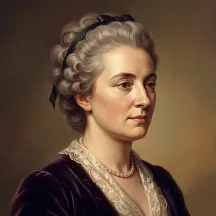
1695 - 1758
Françoise de Graffigny (b. 1695) is a French novelist, playwright, and salonnière who stands as one of the most prominent literary voices of the eighteenth century. She is widely recognized for her insightful contributions to Enlightenment literature and for her role as a central figure in the intellectual circles of Paris.
Born in Nancy, she spent her early life in the Lorraine region before moving to Paris in 1744. Her arrival in the capital allowed her to establish a celebrated salon that attracted major philosophers and writers of the era. These experiences within the French aristocracy and intellectual elite provided her with the perspective necessary to critique social norms and gender roles through her writing.
Her work is noted for its emotional depth and its exploration of the position of women in society. She gained significant international acclaim during her lifetime, with her literature being translated into several languages and influencing the development of the epistolary novel. Her dedication to her craft and her ability to navigate the complex social landscape of her time solidified her status as a significant literary figure.
Essential Reading
- Letters from a Peruvian Woman (Lettres d'une Péruvienne) (1747): This seminal epistolary novel follows an Incan princess who writes letters describing her experiences in French society, serving as a powerful critique of European civilization and gendered power dynamics.
- Cénie (Cénie) (1750): This successful play helped establish her reputation in the theater, focusing on themes of moral virtue and familial duty during the mid-eighteenth century.