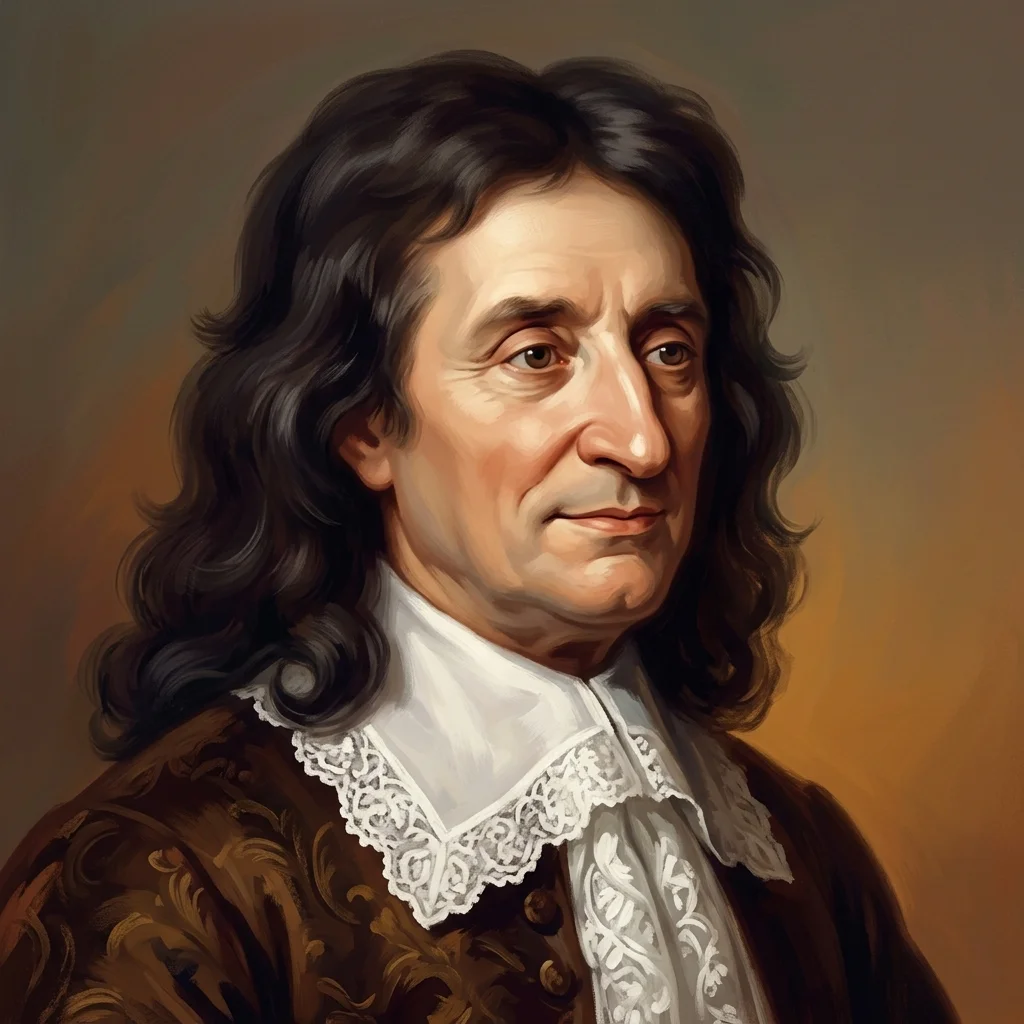
1621 - 1695
French poet, fabulist, and writer (1621 to 1695). Jean de La Fontaine was one of the most widely read and enduring figures of the French Classical period. Though he moved within the illustrious circles of the reign of Louis XIV, he maintained a spirit of intellectual independence, often navigating the complexities of court life with a mix of cautious wit and creative freedom. He is celebrated for transforming the humble fable into a sophisticated literary genre that mirrored the intricacies of the human condition.
His intellectual legacy is anchored in his twelve books of Fables, which drew inspiration from Aesop, Horace, and Eastern traditions like the Panchatantra. Through his masterful use of animal allegories, La Fontaine provided a piercing and often cynical social critique of 17th-century society. His work bypassed the heavy-handed moralizing of his predecessors, choosing instead to expose the follies of power, greed, and vanity with a light, rhythmic touch. He famously noted that his stories were "a picture where everyone may see his own image," using the forest and the farmyard to mask the dangerous realities of the royal court.
A member of the Académie Française, La Fontaine was a perfectionist of form, known for his "vers libre" (free verse) which allowed his narratives a unique, conversational fluidity. Beyond his fables, he was a prolific writer of tales and librettos that often pushed the boundaries of the era’s strict moral codes. His writing remains a cornerstone of French education and world literature, valued for its psychological depth and its timeless observation that "the strongest reason is always the best"—a commentary on the nature of authority that remains as relevant today as it was in the age of the Sun King. His most acclaimed works include his Fables (published in volumes from 1668 to 1694), Contes et nouvelles en vers (1664), Adonis (1658), and Les Amours de Psyché et de Cupidon (1669).