1657 - 1757
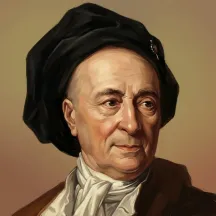
Bernard Le Bouyer de Fontenelle (b. 1657) is a French author, scientist, and philosopher who serves as a pivotal bridge between the seventeenth-century scientific revolution and the eighteenth-century Enlightenment. He is widely recognized for his ability to popularize complex scientific concepts for a general audience, effectively democratizing knowledge through his elegant and accessible prose.
Born in Rouen, France, Fontenelle began his intellectual journey by studying law before transitioning to literature and natural philosophy. He spent much of his life in Paris, where he became a central figure in the literary salons and served as the permanent secretary of the French Academy of Sciences for over four decades. His deep involvement with the academic community allowed him to distill radical scientific ideas into engaging dialogues that reached readers across Europe.
His writing is characterized by a commitment to rationalism and skepticism, often challenging the dogmatic traditionalism of his era. By employing a conversational tone in his scientific treatises, he successfully removed the barriers between professional scholars and curious laypeople. His legacy persists in the modern tradition of science communication, as he remains an exemplar of how to make sophisticated astronomical and physical theories understandable and captivating for the public.
Essential Reading
- Conversations on the Plurality of Worlds (Entretiens sur la pluralité des mondes) (1686): This work uses a series of intimate conversations between a philosopher and a marquise to explain the heliocentric model and the possibility of extraterrestrial life.
- Dialogues of the Dead (Dialogues des morts) (1683): These imaginative exchanges between historical figures allow the author to critique societal norms and explore philosophical questions through a witty, comparative lens.
- History of the Academy of Sciences (Histoire de l'Académie royale des sciences) (1702): This comprehensive record documents the significant scientific discoveries and advancements made by the institution during his tenure, cementing his role as a chronicler of progress.