1798 - 1857
Auguste Comte (1798-1857) was a French philosopher and mathematician who is widely recognized as the founder of sociology and positivism. He coined the term sociology to describe the scientific study of society and established the philosophical system known as positivism, which asserts that authentic knowledge is exclusively derived from natural phenomena and their properties and relations.
Born in Montpellier, France, Comte demonstrated early intellectual promise and entered the École Polytechnique in Paris in 1814. His academic career was interrupted by political closures of the school, but he remained in Paris where he became a secretary to Henri de Saint-Simon, a leading utopian socialist. This collaboration profoundly influenced his early thinking, although they eventually parted ways due to ideological differences regarding the role of religion and science in social organization.
Comte struggled with financial instability and mental health issues throughout his adult life, yet he persisted in developing his comprehensive system of positive philosophy. He lectured privately and published his seminal six-volume work between 1830 and 1842, which laid out the law of three stages governing intellectual development. In his later years, he shifted focus toward establishing a Religion of Humanity, aiming to provide a moral framework for society based on scientific principles rather than theological dogma. His ideas significantly influenced subsequent thinkers, including John Stuart Mill and George Eliot, and helped establish sociology as a distinct academic discipline.
Essential Reading
- Course in Positive Philosophy (Cours de philosophie positive) (1830-1842): This foundational six-volume work establishes the epistemological basis of positivism and outlines the hierarchical classification of sciences.
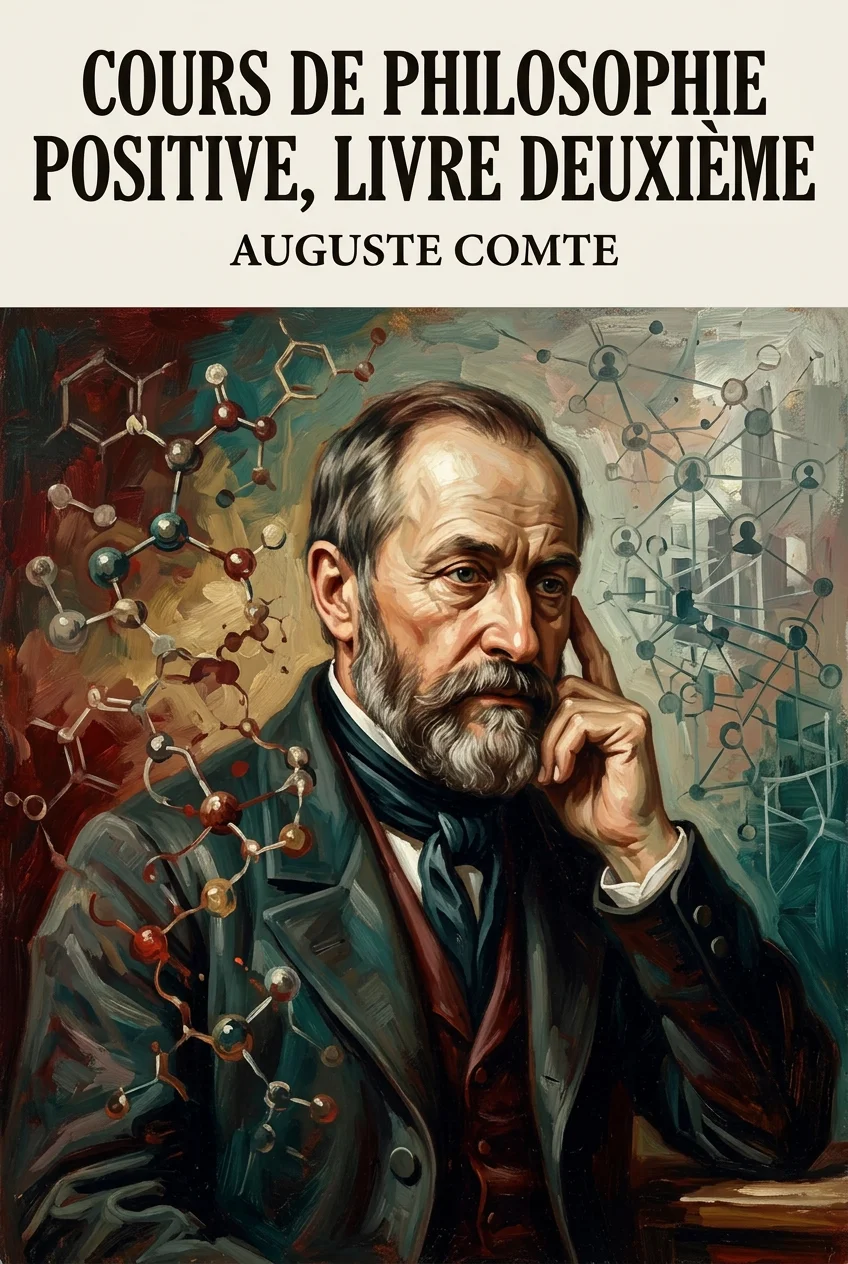
- Book Two (Livre Deuxième) (1835): As part of the larger Course in Positive Philosophy, this volume specifically addresses the mathematical sciences and their fundamental role in the positive method.
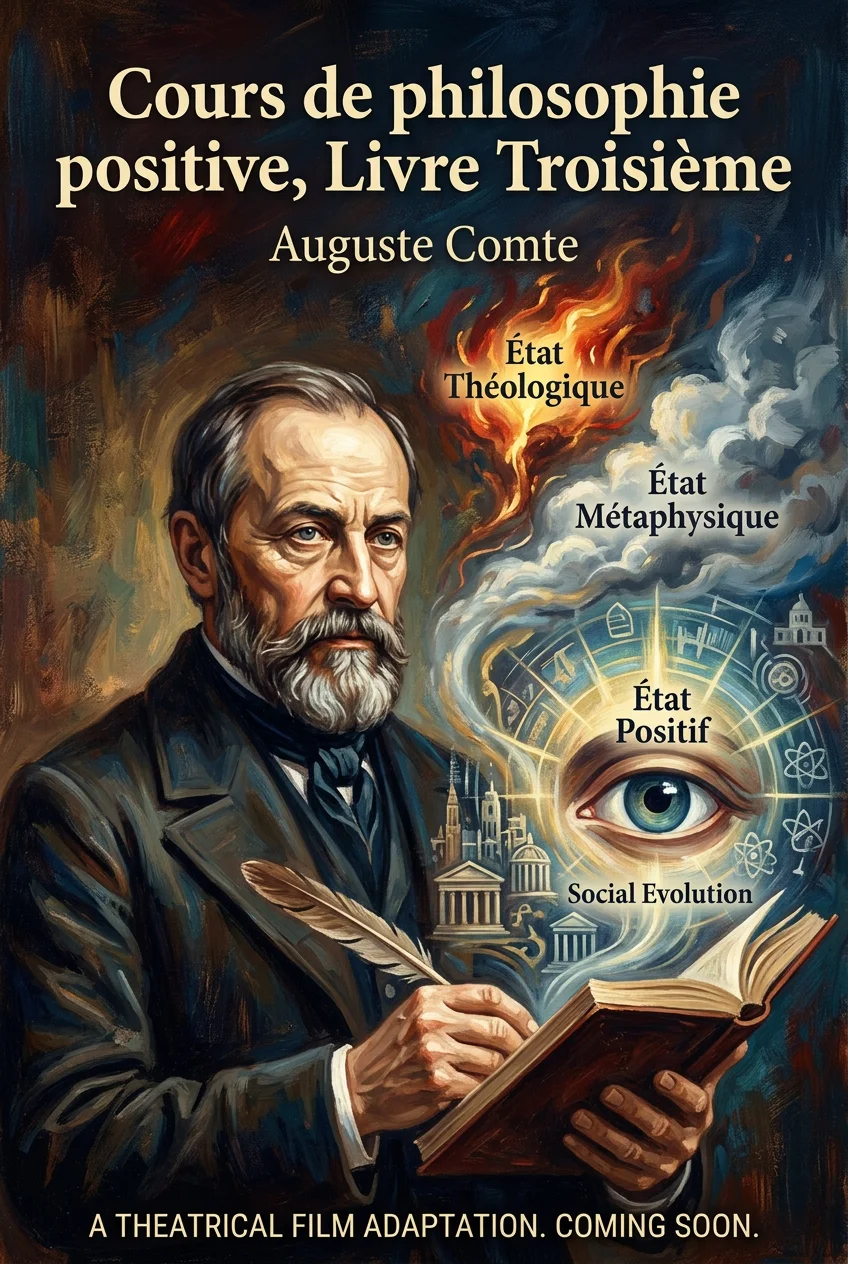
- Book Three (Livre Troisième) (1838): Continuing the systematic exposition of positive philosophy, this volume focuses on astronomy and the physical sciences within Comte's hierarchical framework.
- A General View of Positivism (Discours sur l'ensemble du positivisme) (1848): This text summarizes the core tenets of positivism and introduces Comte's later ideas on social reorganization and the Religion of Humanity.