1889 - 1973
Taha Hussein (1889–1973) was an Egyptian writer, intellectual, and scholar who is widely considered the Dean of Arabic Literature. He lost his sight in early childhood and overcame extraordinary obstacles to become one of the most influential cultural figures in the modern Arab world. His notable contributions included revolutionizing modern Arabic literary criticism and advocating for free public education throughout Egypt.
Born in a rural village in Minya Governorate, Egypt, Taha Hussein began his education in the village kuttab before enrolling at Al-Azhar University. In 1914, he earned the first doctorate awarded by Cairo University, subsequently continuing his postgraduate studies at the Sorbonne University in France, where he earned a second doctorate in history. Upon returning to Cairo, he worked as a university professor and published critical essays that sparked controversy by challenging traditional interpretations of ancient Arabic poetry and history.
Alongside his academic achievements, Taha Hussein actively contributed to shaping Egyptian civic life, serving as the Minister of Education from 1950 to 1952. During his public service, he famously declared that "education is like water and air," leading to the establishment of free primary education across the country. His personal struggle with physical disability, combined with his deep knowledge of Western philosophy and traditional Arab heritage, profoundly influenced his literary works and his advocacy for social causes.
Essential Readings
- The Days (الأيام) (1929): A classic three-part autobiography detailing the author's early life in rural Egypt, his struggle with blindness, and his intellectual awakening.
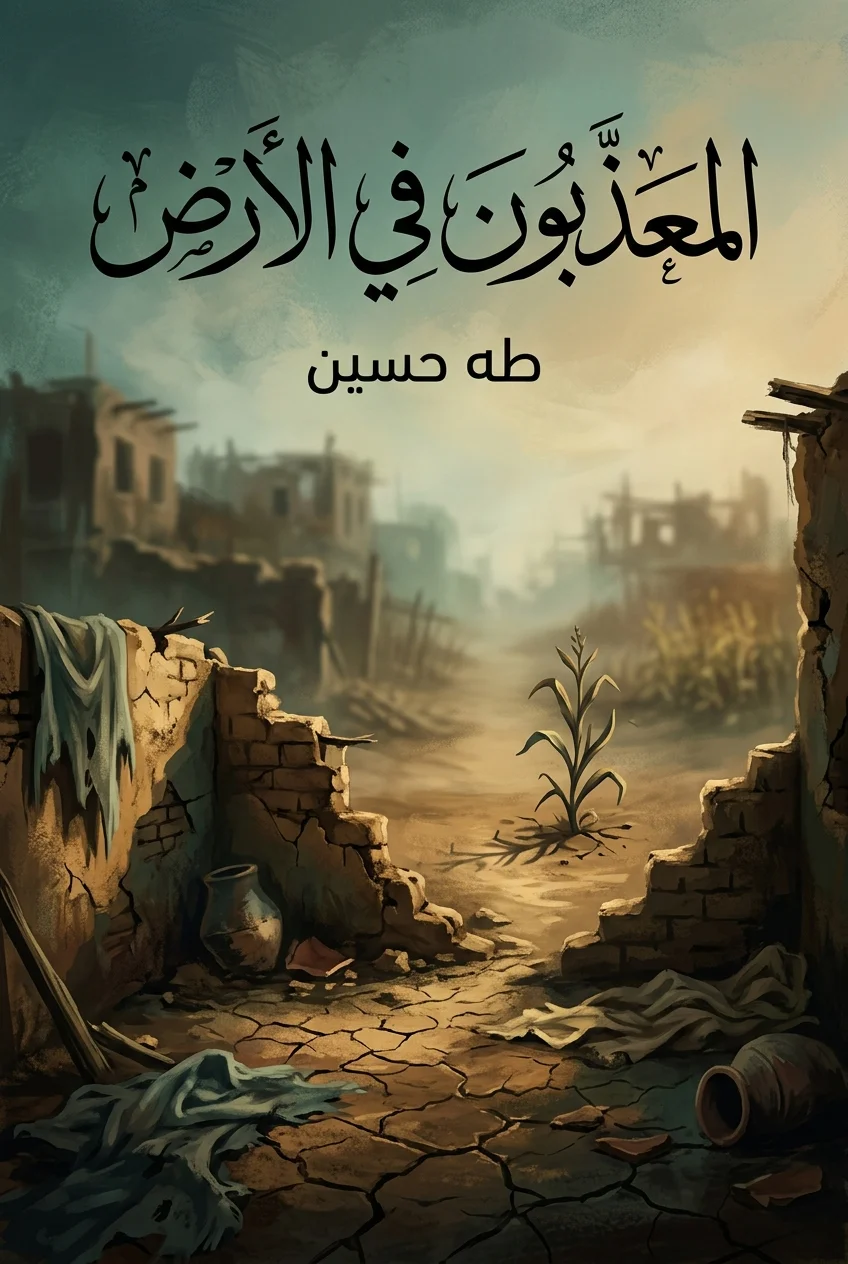
- The Sufferers on Earth (المعذَّبون في الأرض) (1949): A moving collection of short stories addressing poverty, social inequality, and human suffering in mid-twentieth-century Egypt.
- The Two Sheikhs (الشيخان) (1960): An insightful biographical study examining the leadership, character, and historical legacy of the first two leaders of Islam, Abu Bakr and Umar ibn al-Khattab.