1863 - 1913
Kakuzo Okakura (1863). He is a Japanese scholar, art critic, and educator who played a pivotal role in the modernization and preservation of traditional Japanese art during the Meiji period. Through his writings and institutional work, he bridged Eastern and Western aesthetics, interpreting Asian culture for global audiences.
Born in Yokohama, Japan, Okakura studied at Tokyo Imperial University under the influential American educator Ernest Fenollosa, with whom he shared a deep passion for Asian art history. In 1887, he helped establish the Tokyo Fine Arts School, later serving as its director, and subsequently founded the Japan Art Institute to champion traditional Japanese painting techniques against rampant Westernization. His institutional influence extended internationally when he joined the Museum of Fine Arts in Boston in 1904 as an advisor, eventually becoming the head of its Chinese and Japanese art department.
His intellectual framework emphasized the spiritual unity of Asia and challenged Orientalist stereotypes by presenting Asian philosophies through accessible literary prose. By spending his later years dividing his time between the United States and Japan, Okakura fostered cross-cultural dialogue and shaped Western understanding of Eastern art. His legacy endures through his foundational texts on Asian aesthetics, which continue to influence modern art history and philosophy.
Essential Reading
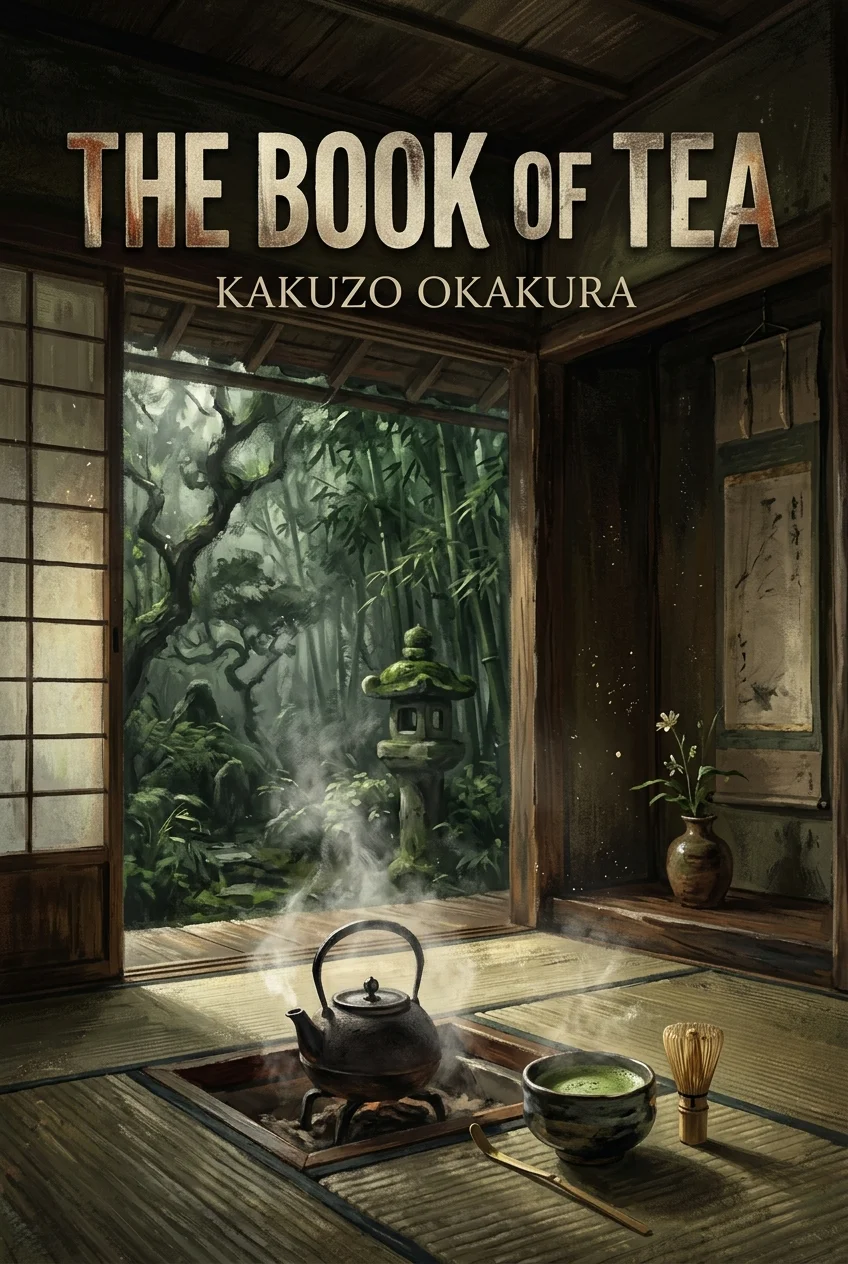
- The Book of Tea (1906): A lyrical essay exploring the philosophy of teaism and how the aesthetic and cultural rituals of the Japanese tea ceremony reflect core principles of Zen Buddhism, Taoism, and Asian art appreciation.
- The Ideals of the East (1903): A groundbreaking cultural study that asserts the spiritual unity of Asia through the famous opening thesis that Asia is one.
- The Awakening of Japan (1904): An insightful historical overview examining Japan's rapid modernization while maintaining its distinct cultural and spiritual heritage.