§1
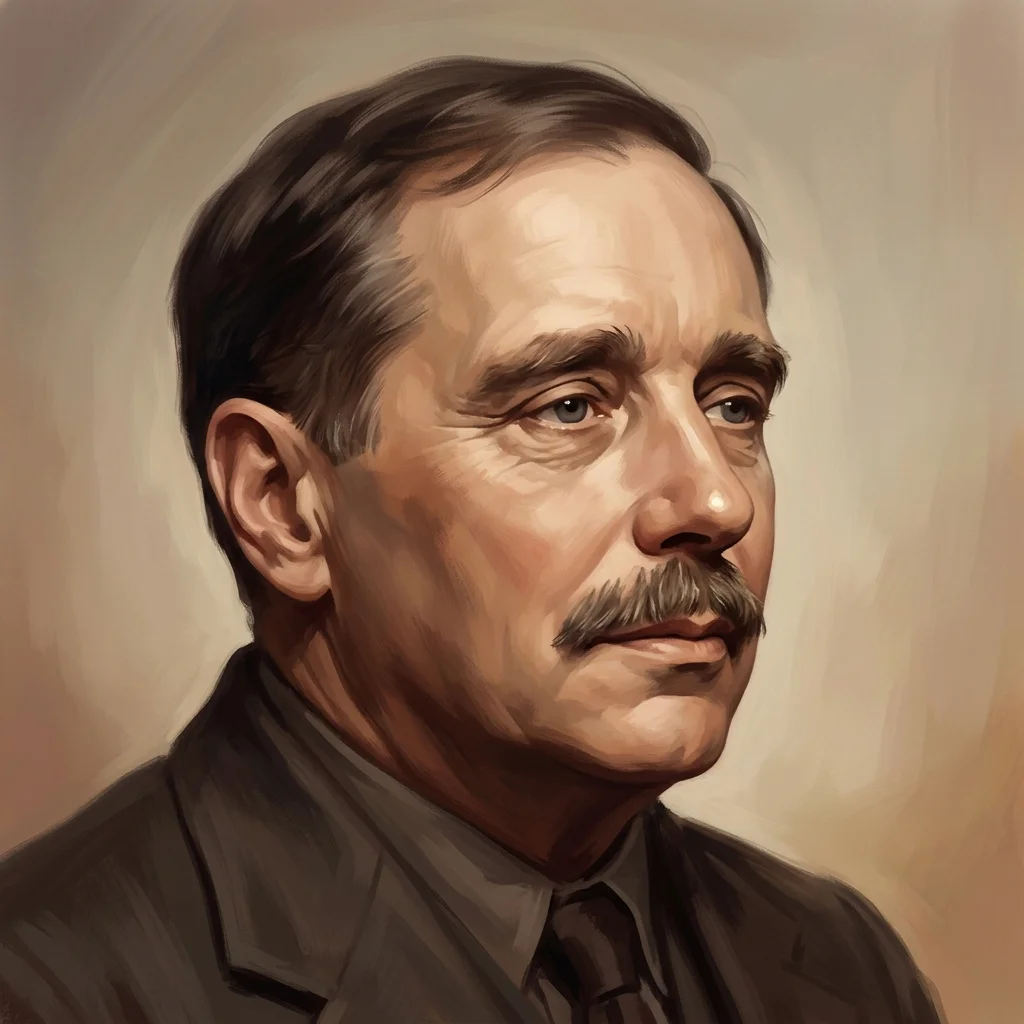
There comes a gentlemanly figure into these events and for a space takes a leading part therein, a Good Influence, a refined and amiable figure, Mr. Chester Coote. You must figure him as about to enter our story, walking with a curious rectitude of bearing through the evening dusk towards the Public Library, erect, large–headed—he had a great, big head full of the suggestion of a powerful mind, well under control—with a large, official–looking envelope in his white and knuckly hand. In the other he carries a gold–handled cane. He wears a silken grey jacket suit, buttoned up, and anon he coughs behind the official envelope. He has a prominent nose, slatey grey eyes and a certain heaviness about the mouth. His mouth hangs breathing open, with a slight protrusion of the lower jaw. His straw hat is pulled down a little in front, and he looks each person he passes in the eye, and directly his look is answered looks away.
Thus Mr. Chester Coote, as he was on the evening when he came upon Kipps. He was a local house agent and a most active and gentlemanly person, a conscious gentleman, equally aware of society and the serious side of life. From amateur theatricals of a nice, refined sort to science classes, few things were able to get along without him. He supplied a fine, full bass, a little flat and quavery perhaps, but very abundant, to the St. Stylites' choir….
He passes on towards the Public Library, lifts the envelope in salutation to a passing curate, smiles and enters….
It was in the Public Library that he came upon Kipps.
By that time Kipps had been rich a week or more, and the change in his circumstances was visible upon his person. He was wearing a new suit of drab flannels, a Panama hat and a red tie for the first time, and he carried a silver–mounted stick with a tortoise shell handle. He felt extraordinarily different, perhaps more different than he really was, from the meek Improver of a week ago. He felt as he felt Dukes must feel, yet at bottom he was still modest. He was leaning on his stick and regarding the indicator with a respect that never palled. He faced round to meet Mr. Coote's overflowing smile.
"What are you doang hea?" said Mr. Chester Coote.
Kipps was momentarily abashed. "Oh," he said slowly, and then, "Mooching round a bit."
That Coote should address him with this easy familiarity was a fresh reminder of his enhanced social position. "Jes' mooching round," he said. "I been back in Folkestone free days now. At my 'ouse, you know."
"Ah!" said Mr. Coote. "I haven't yet had an opportunity of congratulating you on your good fortune."
Kipps held out his hand. "It was the cleanest surprise that ever was," he said. "When Mr. Bean told me of it—you could have knocked me down with a feather."
"It must mean a tremendous change for you."
"Oo. Rather. Change. Why, I'm like the chap in the song they sing, I don't 'ardly know where I are. You know."
"An extraordinary change," said Mr. Coote. "I can quite believe it. Are you stopping in Folkestone?"
"For a bit. I got a 'ouse, you know. What my gran'father 'ad. I'm stopping there. His housekeeper was kep' on. Fancy—being in the same town and everything!"
"Precisely," said Mr. Coote. "That's it!" and coughed like a sheep behind four straight fingers.
"Mr. Bean got me to come back to see to things. Else I was out in New Romney, where my Uncle and Aunt live. But it's a Lark coming back. In a way…."
The conversation hung for a moment.
"Are you getting a book?" asked Coote.
"Well, I 'aven't got a ticket yet. But I shall get one all right, and have a go in at reading. I've often wanted to. Rather. I was just 'aving a look at this Indicator. First–class idea. Tells you all you want to know."
"It's simple," said Coote, and coughed again, keeping his eyes fixed on Kipps. For a moment they hung, evidently disinclined to part. Then Kipps jumped at an idea he had cherished for a day or more,—not particularly in relation to Coote, but in relation to anyone.
"You doing anything?" he asked.
"Just called with a papah about the classes."
"Because―. Would you care to come up and look at my 'ouse and 'ave a smoke and a chat. Eh?" He made indicative back jerks of the head, and was smitten with a horrible doubt whether possibly this invitation might not be some hideous breach of etiquette. Was it, for example, the correct hour? "I'd be awfully glad if you would," he added.
Mr. Coote begged for a moment while he handed the official–looking envelope to the librarian and then declared himself quite at Kipps' service. They muddled a moment over precedence at each door they went through and so emerged to the street.
"It feels awful rum to me at first, all this," said Kipps "'Aving a 'ouse of my own and all that. It's strange, you know. 'Aving all day. Reely I don't 'ardly know what to do with my time.
"D'ju smoke?" he said suddenly, proffering a magnificent gold decorated pigskin cigarette case, which he produced from nothing, almost as though it was some sort of trick. Coote hesitated and declined, and then, with great liberality, "Don't let me hinder you…."
They walked a little way in silence, Kipps being chiefly concerned to affect ease in his new clothes and keeping a wary eye on Coote. "It's rather a big windfall," said Coote presently. "It yields you an income―?"
"Twelve 'undred a year," said Kipps. "Bit over—if anything."
"Do you think of living in Folkestone?"
"Don't know 'ardly yet. I may. Then again, I may not. I got a furnished 'ouse, but I may let it."
"Your plans are undecided?"
"That's jest it," said Kipps.
"Very beautiful sunset it was to–night," said Coote, and Kipps said, "Wasn't it?" and they began to talk of the merits of sunsets. Did Kipps paint? Not since he was a boy. He didn't believe he could now. Coote said his sister was a painter and Kipps received this intimation with respect. Coote sometimes wished he could find time to paint himself,—but one couldn't do everything and Kipps said that was "jest it."
They came out presently upon the end of the Leas and looked down to where the squat dark masses of the Harbour and Harbour Station, gemmed with pinpoint lights, crouched against the twilit grey of the sea. "If one could do that," said Coote, and Kipps was inspired to throw his head back, cock it on one side, regard the Harbour with one eye shut and say that it would take some doing. Then Coote said something about "Abend," which Kipps judged to be in a foreign language and got over by lighting another cigarette from his by no means completed first one. "You're right, puff, puff."
He felt that so far he had held up his end of the conversation in a very creditable manner, but that extreme discretion was advisable.
They turned away and Coote remarked that the sea was good for crossing, and asked Kipps if he had been over the water very much. Kipps said he hadn't been—"much," but he thought very likely he'd have a run over to Boulogne soon, and Coote proceeded to talk of the charms of foreign travel, mentioning quite a number of unheard–of places by name. He had been to them! Kipps remained on the defensive, but behind his defences his heart sank. It was all very well to pretend, but presently it was bound to come out. He didn't know anything of all this….
So they drew near the house. At his own gate Kipps became extremely nervous. It was a fine, impressive door. He knocked neither a single knock nor a double, but about one and a half—an apologetic half. They were admitted by an irreproachable housemaid, with a steady eye, before which Kipps cringed dreadfully. He hung up his hat and fell about over hall chairs and things. "There's a fire in the study, Mary?" he had the audacity to ask, though evidently he knew, and led the way upstairs panting. He tried to shut the door and discovered the housemaid behind him coming to light his lamp. This enfeebled him further. He said nothing until the door closed behind her. Meanwhile to show his sang froid he hummed and flitted towards the window, and here and there.
Coote went to the big hearthrug and turned and surveyed his host. His hand went to the back of his head and patted his occiput—a gesture frequent with him.
"'Ere we are," said Kipps, hands in his pockets and glancing round him.
It was a gaunt Victorian room, with a heavy, dirty cornice, and the ceiling enriched by the radiant plaster ornament of an obliterated gas chandelier. It held two large glass fronted bookcases, one of which was surmounted by a stuffed terrier encased in glass. There was a mirror over the mantel and hangings and curtains of magnificent crimson patternings. On the mantel were a huge black clock of classical design, vases in the Burslem Etruscan style, spills and toothpicks in large receptacles of carved rock, large lava ash trays and an exceptionally big box of matches. The fender was very great and brassy. In a favourable position, under the window, was a spacious rosewood writing desk, and all the chairs and other furniture were of rosewood and well stuffed.
"This," said Kipps, in something near an undertone, "was the o' gentleman's study—my grandfather that was. 'E used to sit at that desk and write."
"Books?"
"No. Letters to the Times, and things like that. 'E's got 'em all cut out—stuck in a book…. Leastways, he 'ad. It's in that bookcase…. Won't you sit down?"
Coote did, bowing very slightly, and Kipps secured his vacated position on the extensive black skin rug. He spread out his legs compass–fashion and tried to appear at his ease. The rug, the fender, the mantel and mirror conspired with great success to make him look a trivial and intrusive little creature amidst their commonplace hauteur, and his own shadow on the opposite wall seemed to think everything a great lark and mocked and made tremendous fun of him….