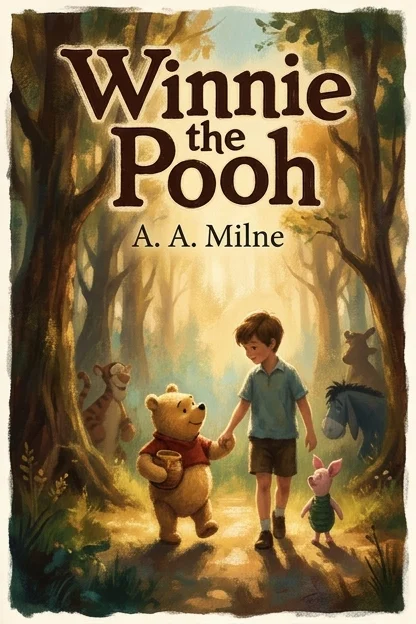
Winnie l'ourson
Découvrez le classique indémodable d'A. A. Milne, Winnie l'ourson. Pénétrez dans la Forêt des Rêves Bleus, ce merveilleux terrain de jeu pour l'imaginaire où Jean-Christophe et ses animaux en peluche s'embarquent dans des aventures inoubliables. Au fil de grandes expéditions et de péripéties quotidiennes, ce chef-d'œuvre célèbre la puissance profonde du jeu, de l'amitié et de l'innocence de l'enfance. Un ouvrage idéal pour les lecteurs de tous âges en quête d'une évasion nostalgique au cœur d'un univers réconfortant fait de joies simples.
Rejoignez-nous
Commencer la lecture
Inscrivez-vous gratuitement pour accéder à ce livre.
À propos de l'auteur

Plus en Fiction pour enfants




Les plus lus du mois
Thérèse Raquin

On ne badine pas avec l'amour

Une page d'amour

The Bible | American Standard Version

Les Rougon-Macquart 2 : La curée
Contes à Ninon

The Adventures of Sherlock Holmes

Gamiani ou Deux Nuits d'Excès

Les Rougon-Macquart 8 : Une page d'amour
Les Rougon-Macquart 20 : Le docteur Pascal

The Green Eagle