1804 - 1876
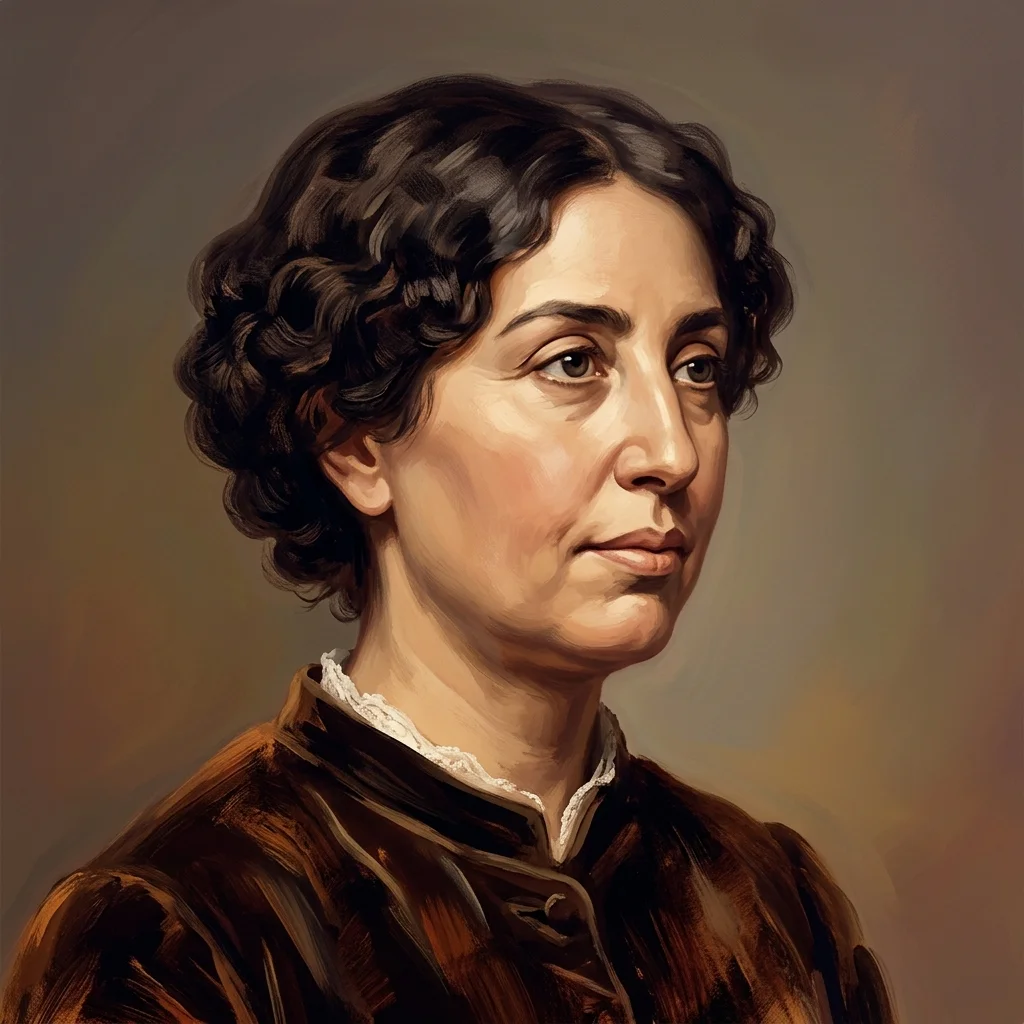
George Sand (1804–1876), born Amantine Lucile Aurore Dupin, was a pioneering French novelist, memoirist, and social critic who became one of the most prolific and popular writers in Europe during the nineteenth century. She is best known for her profound influence on the Romantic movement and her courageous exploration of women's rights, class struggles, and rural life through her extensive literary catalog.
Raised primarily at her grandmother's estate in Nohant, the pastoral landscapes of the Berry province deeply influenced her later rustic novels and her appreciation for the peasantry. In 1831, after leaving an unhappy marriage, she moved to Paris and adopted a male pseudonym and attire to navigate the literary and social circles of the city with greater freedom. This bold defiance of gender norms allowed her to engage as an equal with contemporary intellectuals and artists, including her well-documented companions Frédéric Chopin and Alfred de Musset.
Sand’s writing evolved from early feminist explorations of marriage to socialist-leaning novels and eventually to her celebrated rustic tales that idealized country life. Her active participation in the 1848 Revolution reflected her commitment to democratic ideals, though she later retreated to Nohant to focus on her memoirs and stories for her grandchildren. Throughout her life, she remained a symbol of independence, using her pen to advocate for the marginalized and to redefine the role of the female artist in modern society.
Essential Reading:
- Indiana (1832): This debut solo novel established Sand’s reputation by critiquing the legal and social constraints of marriage and the inequality faced by women.
- La Marquise – Lavinia – Metella – Mattea (1832–1833): These early novellas and stories explore themes of passion, social standing, and the complex emotional lives of independent women.
- Le compagnon du Tour de France (1840): This social novel reflects Sand's interest in proletarian issues and her belief in the moral dignity and potential of the working class.
- Consuelo (1842): Often considered her masterpiece, this sprawling novel follows the life of a gifted singer and explores the intersection of art, music, and mysticism.
- La Mare au diable (1846): This classic pastoral tale depicts a simple and poetic vision of rural life and the triumph of sincere, unpretentious love.
- François le Champi (1848): Set in the Berry countryside, this novel tells the story of an abandoned child whose inherent goodness leads him to emotional and social fulfillment.
- La Petite Fadette (1849): This beloved rustic novel focuses on a young woman dismissed as a social outcast who eventually proves her worth through her intelligence and spirit.
- Gribouille (1851): Originally written for her grandchildren, this charming story follows a simple-hearted character who navigates a world of moral lessons and transformations.
- Nanon (1872): Set during the French Revolution, this late-career work portrays a peasant woman’s rise to prosperity and independence through her own labor and wit.