1850 - 1893
Guy de Maupassant (1850–1893) was a French writer and journalist who is widely celebrated as a master of the short story and a key figure in the naturalist school of literature. His defining contribution to the field was his ability to depict human nature and social conditions with a stark, unsentimental realism that influenced countless writers across the globe.
Born in the Normandy region of France, Maupassant's early life in the countryside and his service in the Franco-Prussian War of 1870 provided the foundational settings and themes for much of his later work. He was mentored by the legendary novelist Gustave Flaubert, who introduced him to the literary elite of Paris and emphasized the importance of precision and observation in writing. His professional breakthrough arrived in 1880 with the publication of the short story Boule de Suif, which immediately established him as a major literary talent.
During the height of his career in the 1880s, Maupassant was incredibly productive, writing hundreds of stories and several novels that explored the complexities of Parisian society and the hardships of rural life. However, his later years were marked by a tragic decline in health due to a long-term illness, which increasingly manifested in his writing through themes of paranoia and the supernatural. He spent his final years in a private asylum in Paris before passing away at the age of forty-two, leaving behind a vast body of work that remains essential to the study of modern fiction.
Essential Reading
- Le Horla (1887): This influential work of psychological horror uses a diary format to document a narrator's terrifying encounter with an invisible supernatural being that slowly consumes his sanity.
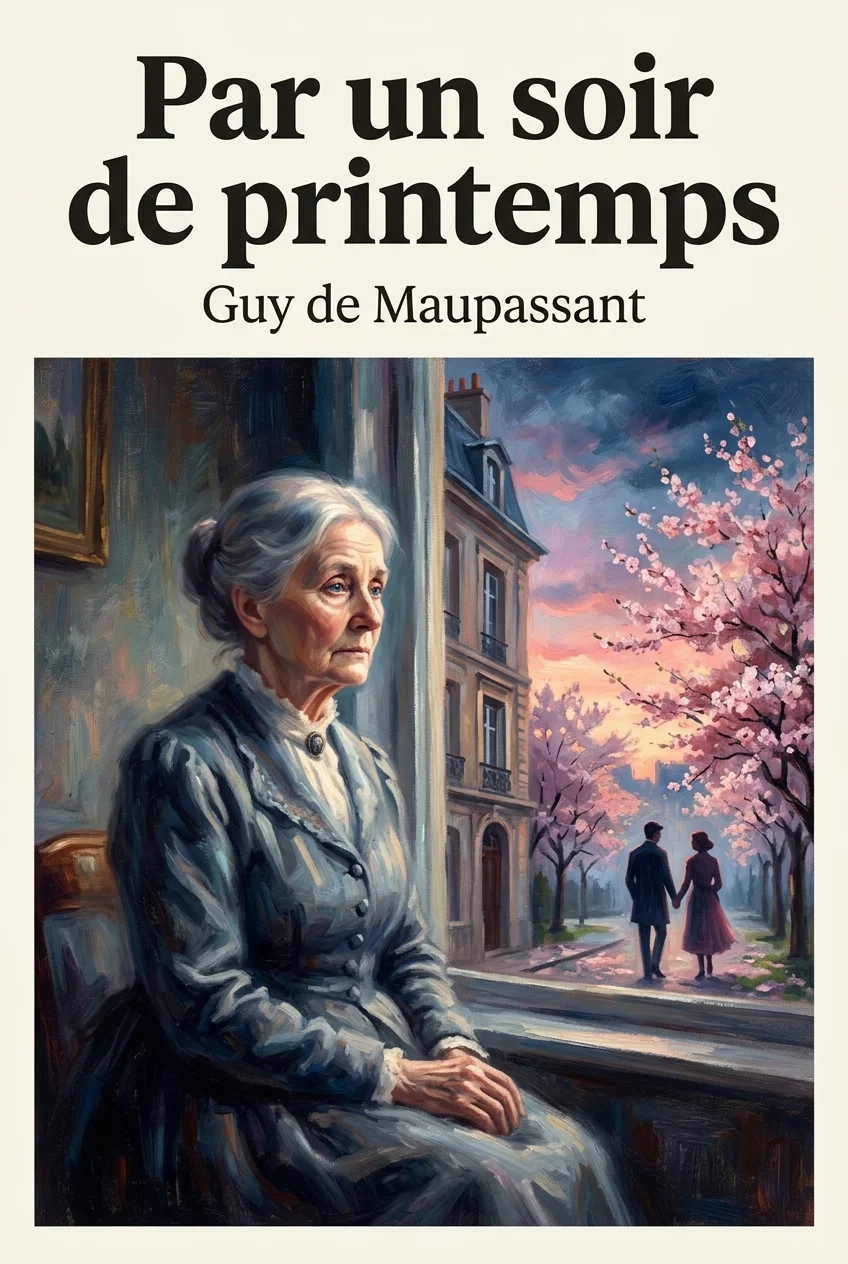
- Par un soir de printemps (1881): This evocative story captures the emotional awakening and subtle social tensions that occur during a single spring evening, showcasing the author's talent for capturing fleeting moments of human experience.
- Boule de Suif (1880): Set during the Franco-Prussian War, this story critiques the hypocrisy of the upper classes by contrasting their behavior with the dignity of a young woman they choose to exploit.
- Bel-Ami (1885): This major novel follows the ascent of an ambitious and unscrupulous young man who uses his charm and the influence of powerful women to climb the social ladder of 19th-century Paris.
- The Necklace (1884): A quintessential example of the twist ending, this story explores themes of vanity and social class through a woman who spends her life paying for a lost piece of jewelry.