1494 - 1553
Francois Rabelais (c. 1494) is a French Renaissance writer, physician, and humanist best known for his exuberant satire and foundational contributions to modern European literature. Through his mastery of vernacular prose, he transformed the novel into a vehicle for philosophical inquiry, social critique, and linguistic innovation.
Born in Chinon, France, Rabelais initially trained as a Franciscan monk before transferring to the Benedictine order and eventually pursuing a successful career in medicine. His experiences practicing and lecturing in Lyon exposed him to the vibrant currents of humanism, leading him to translate medical texts of Hippocrates and Galen while developing his literary persona. As a physician, he traveled extensively and served as personal secretary and physician to Cardinal Jean du Bellay, journeys that afforded him firsthand insight into European diplomacy and the papal court.
His writing career blossomed alongside his medical practice, heavily influenced by the intellectual tensions between medieval scholasticism and Renaissance learning. Rabelais utilized humor, grotesque realism, and carnivory to lampoon religious hypocrisy, political corruption, and rigid dogmatism, earning both condemnation and protection from powerful patrons. Despite facing censorship from the Sorbonne, his literary legacy endured as a monumental celebration of human appetite, wit, and intellectual freedom.
Essential Reading
- Pantagruel (1532): This comedic masterpiece recounts the extraordinary birth, education, and heroic exploits of the giant prince Pantagruel, setting a new standard for vernacular satire.
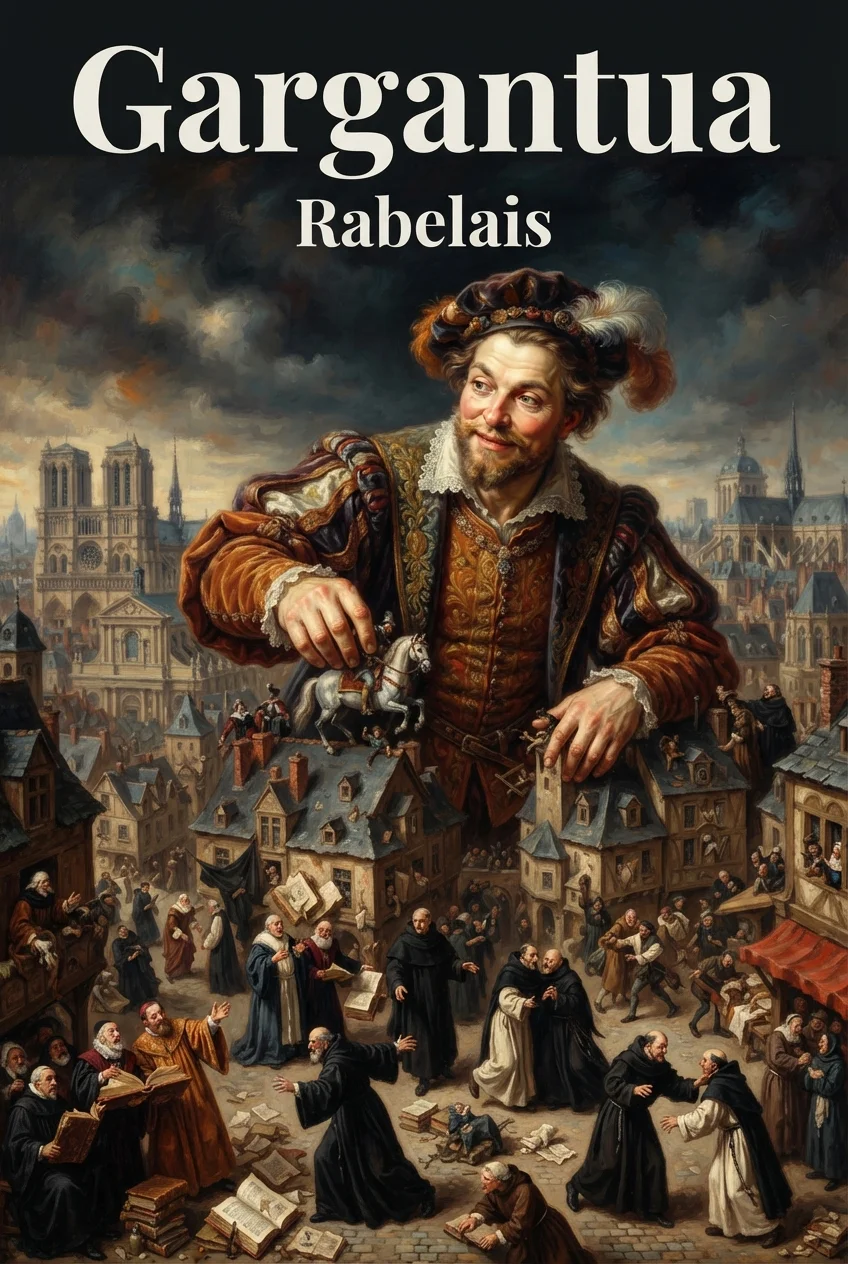
- Gargantua and Pantagruel (1534): This expansive five-book chronicle details the hilarious and philosophical adventures of a dynasty of giants, satirizing the educational, religious, and political institutions of sixteenth-century Europe.