-620 - -564
Aesop (b. 620 BCE) was an ancient Greek storyteller and fabulist who is credited with initiating a highly influential tradition of moral storytelling. Historically regarded as a slave who secured his freedom through his wit, he is celebrated globally for creating short narratives that use anthropomorphic animals to convey essential human truths. His legendary tales have shaped Western literary traditions and moral education for millennia.
According to historical accounts by ancient writers such as Herodotus, Aesop lived and worked on the island of Samos as a slave to a master named Iadmon. After gaining his freedom due to his intellectual capabilities, he traveled extensively throughout the Mediterranean world, serving as an advisor and diplomat. His travels eventually brought him to the court of King Croesus of Lydia, where his clever storytelling secured him a position of high favor and respect.
Aesop's life came to a dramatic end in Delphi, where historical sources indicate he was falsely accused of sacrilege and executed by being thrown from a cliff. His unique experiences as a marginalized individual who navigated elite social spheres heavily influenced his narratives, which frequently champion the clever underdog over the powerful. Although he did not record his stories in writing, his oral tales were later transcribed by subsequent generations, cementing his legacy as a master of the fable genre.
Essential Reading
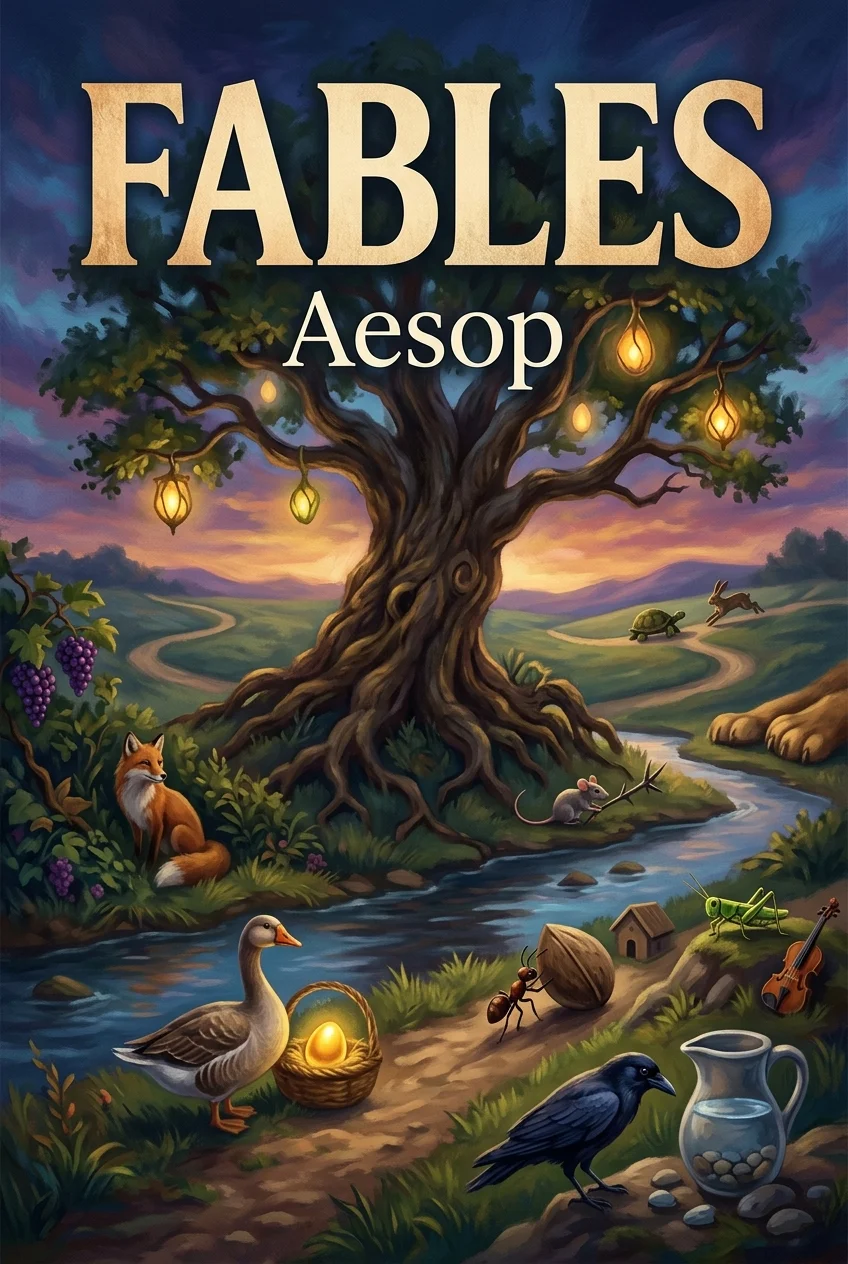
- Fables (c. 600 BCE): A timeless collection of short, moralistic tales featuring speaking animals that illustrate human follies, virtues, and life lessons.