1872 - 1954
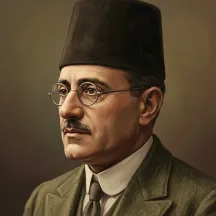
Nicola Haddad (1878–1954) was a pioneering Lebanese-Egyptian journalist, sociologist, and novelist who played a significant role in the Arab Nahda, or Renaissance. He is widely recognized for his progressive views on social reform, gender equality, and the integration of scientific principles into Arabic literature and social critique. Through his extensive journalistic work and diverse publications, he sought to modernize Arab thought and challenge traditional societal norms.
Born in the village of Jun in Mount Lebanon, Haddad studied pharmacy at the Syrian Protestant College in Beirut before relocating to Egypt, which was then the vibrant cultural and intellectual hub of the Arab world. In Egypt, he co-founded and edited several influential periodicals, including Al-Ra'id and Al-Muqtataf, where he popularized scientific theories such as Darwinism and advocated for social justice. His writing was deeply influenced by Western sociology and science, which he sought to synthesize with Eastern cultural values to foster societal advancement.
Throughout his career, Haddad focused on issues such as women's liberation, economic inequality, and the psychological dimensions of human behavior. He believed that literature should serve a social purpose, using his novels and essays to dramatize moral dilemmas and advocate for intellectual enlightenment. His contributions to modern Arabic thought helped lay the groundwork for contemporary sociological study and literary realism in the Middle East.
Essential Reading
- Adam al-Jadid (1913): This pioneering social novel explores themes of moral reform, love, and gender equality, presenting a vision for a modernized Arab society through the lens of progressive relationships.
- Ilm Adab al-Nafs (1920): A groundbreaking psychological and sociological study that examines the relationship between human emotions, ethics, and social behavior to promote self-improvement and intellectual maturity.
- Wada'an Ayyuha al-Sharq (1948): This influential sociopolitical critique serves as a passionate call for cultural renewal, urging Eastern societies to abandon stagnant traditions and embrace scientific progress.