The Intolerable Psychiatrist
I disliked the shadow of Dr Norbert even before I looked up and saw him. He was and he meant to be an overwhelming sort of man, and though I am indolent, self–indulgent and unenterprising I can be as obstinate as a whole team of mules. I braced myself for opposition to whatever he wanted or had to say before he opened his mouth.
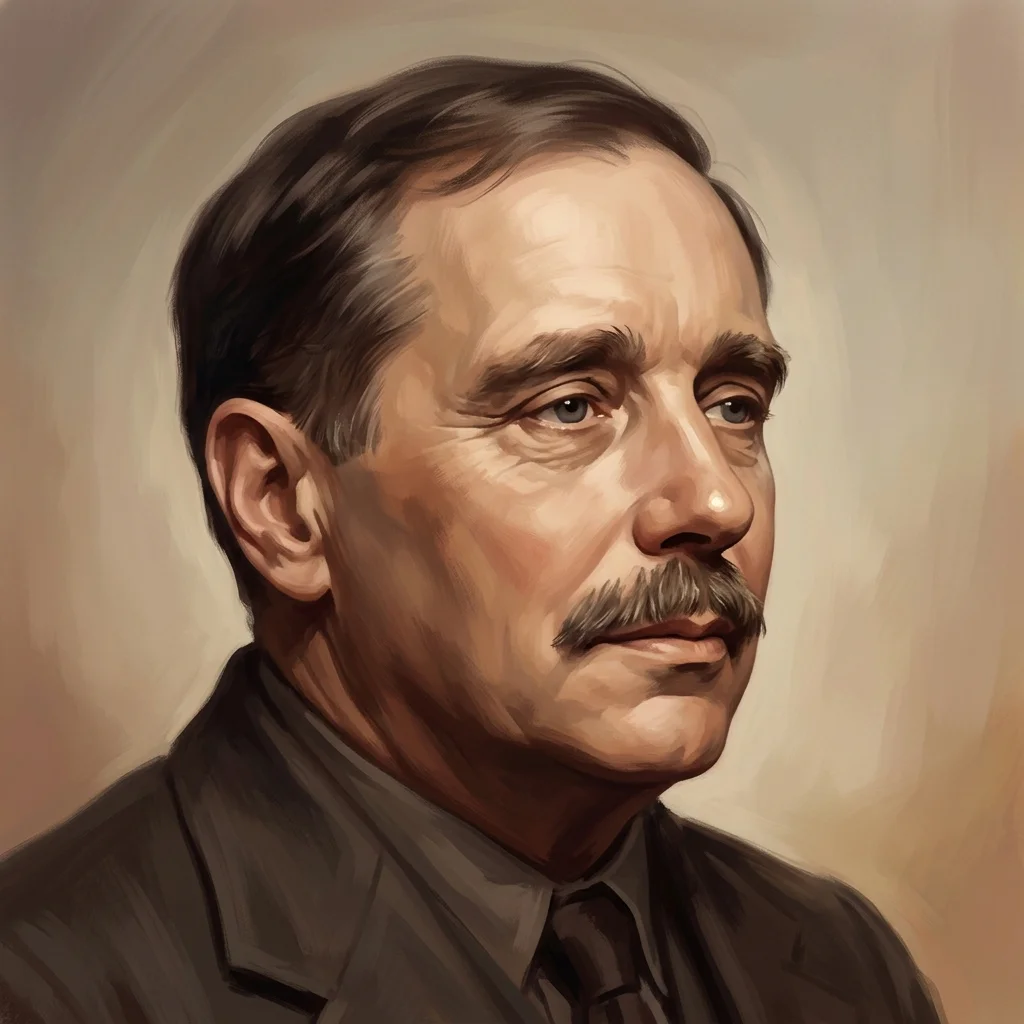
He was not at all the sort of person I should have expected a psychotherapeutist to be. A psychotherapeutist I think ought to have calm eyes and a reassuring manner—and a certain general neatness of self–control. He ought to look fresh and healthy and this fellow was distinctly cadaverous. He was large and expansive and untidy with lots of undisciplined black hair and thick eyebrows, and his large dark and flashing eyes either rolled about in his more voluble moments or came to a focus in a dramatic pause and glared at you—not a steady look but a glare that pushed at your face and was supported by an immense frown. His features were uniformly large, and he had the loose mouth of an orator and a voice of remarkable amplitude. He wore an old–fashioned upstanding white collar and a loose black bow tie very much under one ear. It was as if he had dressed himself once for all in some remote pre– war fashion and never changed it since. He looked much more like an actor on vacation than a psychotherapeutist. He made me think of the old Punch pictures of the Grand Old Man, or Henry Irving or Thomas Carlyle. A more unsuitable figure to interrupt a couple of decent–looking modern Englishmen sitting over their apéritifs on the terrace of the Perona Source Hotel it would be hard to imagine.
But there he was, entirely unlike anything I could have foreseen, the great Dr Norbert, Finchatton's mental healer, hands on hips, looking down on me in his most impressive manner. Finchatton had described him as unexpected, but the last thing I should have expected was anything so large, so oracular and so antique.
"I have been watching you from above," he said as though he was God Almighty. "I didn't want to interrupt while Finchatton was telling his tale. But now I perceive you have got through with it and I pounce."
Finchatton looked at me with a sort of silent entreaty to bear with Norbert's extraordinary manner and hear him out.
"You've heard his story?" Norbert demanded of me.
His manner did nothing to veil the fact that he was the psychotherapeutist and Finchatton was his "case". "He told you about how the cave–man dawned upon his mind? He talked about that terror in Cainsmarsh. Good! And the growing realization of evil? Well,—how have you reacted to that? What do you, with your manifestly very normal mind, make of it?"
He thrust his great face, all interrogation, some inches towards me. "Tell me in your own words," he said, and waited like a teacher examining a child.
"Dr Finchatton," said I, "has been relating some very extraordinary things. Yes. But I should have to think them over a lot before I could pass judgment upon them."
Norbert made the grimace of a teacher dealing with a stupid child.
"But I want your reactions now. Before you think."
"You MAY want," said I to myself. "I can't," I said aloud.
"But it will be of very great importance to Dr Finchatton for you to tell me now. Never mind why."
Suddenly I heard a clock striking. "Good heavens!" I cried, standing up and throwing a ten–franc note to the hovering waiter. "I shall keep my aunt waiting for lunch! That will NEVER do."
"But you CAN'T leave this business like this!" said Norbert, featuring an incredulous amazement. "You can't. It's your duty to a fellow–creature in trouble to hear this case out and help to rationalize it. You MUST help us." Glare. "Positively I CAN'T release you."
I turned to Finchatton. "If Dr Finchatton," I said, "would like to talk about it some more … "
"Of course he wants to talk to you some more."
I kept my eyes on Finchatton, who nodded with an intensified appeal.
"I'll come again," I said. "Tomorrow. About this time. But I can't stay now…. It's impossible."
I went down the winding road at something between a walk and a trot— really concerned to be so late, because you know my aunt is simply awful if anyone keeps her waiting for lunch. I was already doubtful about the promise I had given and a little angry at having been forced to make it. It was as if I had admitted some preposterous claim upon my attention and had bought myself off.
I turned my head and saw the two men among those above me, side by side, Norbert overshadowing Finchatton.
"Tomorrow," I called—though I suppose I was well out of earshot.
Norbert made a large gesture.
Now I did not want in the least to see this Dr Norbert any more. I had indeed conceived a violent antipathy for him. I did not like his "You–and–Finchatton–are–rabbits–and–now–I–am–going–to–dissect– you" style. I did not like his large enveloping voice nor the way his brow and purpose seemed to overhang the rest of him. And I detest angular commanding gestures made with arms that are much too long. But on the other hand I had taken a real liking to Dr Finchatton and developed a very lively interest in his story. I thought he had told it very vividly. I wish I could convey the conviction of his manner in this transcript. Directly I got away from him I began to think of questions I might have asked him and to want to see him again. I regarded Norbert as a nuisance who had just butted in upon an interesting tale. I dismissed Norbert from my mind and went on thinking of Finchatton.
There was something about this story of a magic marshland into which a man might go sane and confident, admiring the butterflies and the flowers, and out of which presently he would come running again frantic with fear and rage, that had seized hold upon my imagination very strongly. And the way in which that evil old skull, that ancestral skull, lurking unseen at first in the background, had slowly become visible—! It was like something being lit up behind a transparency. It was an explanation that was itself an enigma. And now, degree by degree, those bare jaws were being clad and covered until a phantom lip framed the grinning teeth, and there were dark aggressive bloodshot eyes below the beetling brows. The caveman was becoming more and more plainly a living presence as the story germinated in my mind.
It was a face at last and not a skull that watched me out of that dream story. It was absurd, but indeed it seemed to be watching me. It watched me all that evening and it mopped and mowed in the night. It made me inattentive so that in the afternoon my combinations at croquet were unusually shortsighted and poor, and in the evening I offended my aunt deeply by failing to play up to my usual form. She was against me, but as she reckoned on my playing up to my usual form, she was surprised and perplexed by the things I did and put quite off her game, so that she and her partner lost heavily. But I scarcely heeded her reproaches and I undressed slowly, my mind full of that distant marshland so mysteriously accursed, so monstrously overshadowed now by that brutish revenant. I sat for quite a long time thinking it over before I went to bed.
Next day I got up to the Perona Source Hotel rather late. I had meant to be early. I would have taken a tram but an AGENT explained they were not running. There had been a lightning strike organized by the Communists and there had been a fight at the depot in which several people had been injured. 'One must be firm these days,' said the agent. Consequently I had to walk the whole way. And it was bad luck I thought, to find Dr Norbert stretching out his long legs under a table umbrella on the terrace and no signs of Dr Finchatton. Norbert motioned for me to join him and I sat down on a green chair beside his table. I did so reluctantly. I wanted to make it plain that it was Finchatton I wanted to see. I wanted more of the story and I did not want any mental probing, judgment dissection, earnest invasion of my private thoughts by this pretentious individual.
"Where's your friend?" I asked.
"He cannot come down today. It is just as well."
"I thought he had arranged—"
"HE thought he had arranged—. But he was prevented. As I say, it is just as well."
"I don't see that."
"From MY point of view. I want very much to get a common–sense outside view of this story that fills his mind. I want it for my own sake as well as his."
"But how can you expect me to contribute?"
"Well—for one simple thing; do you know any part of the world called Cainsmarsh?"
He turned round to look at me as he might have looked at an animal he had just given an injection.
"I imagined it was somewhere in fenland."
"There is no such district in the world."
"It is a pseudonym?"
"It is a myth."
He surveyed me for a moment and then decided that for the present I was not worth watching. He put his two long hands palm to palm in front of him and spoke with great deliberation staring out to sea. "Our friend," he said, "WAS a doctor near Ely. Everything he told you was true and everything he told you was a lie. He is troubled beyond reason by certain things and the only way in which he can express them even to himself is by a fable."
"But some of these things—really happened?"
"Oh yes. There WAS a case of gross cruelty to a dog. There WAS a poor old drunken parson who beat his wife. Things of that sort are happening all over the world every day. They are in the nature of things. If you cannot accept things like that, sir, YOU CANNOT LIVE. And Finchatton really went to the Tressider Museum at Ely, and Cunningham, the custodian, had the sense to spot his condition and send him on to me. But the mischief was already done to him before he went into the marsh. He's told you practically everything—but as though he showed it through bottle glass that distorted it all. And the reason why he has made it all up into that story—"
Dr Norbert turned upon me, putting his arms akimbo and glaring at my face. He spoke with slow deliberation, as if he was speaking in capital letters, "—is because the realities that are overwhelming him are so monstrous and frightful that he has to transform them into this fairy tale about old skulls and silences in butterfly land, in the hope of getting them down to the dimensions of an hallucination and so presently expelling them from his thoughts."
The expression of his face made me uncomfortable. I turned and beckoned the waiter for another vermouth in order to recover my composure. "And what," I asked offhandedly, "may those more terrible realities be?"
"Do you never read a daily newspaper?" asked Dr Norbert.
"Not very intently. Most of the stuff seems to me to be either pompous or wilfully disagreeable. But I do The Times Cross–Word Puzzle nearly every day. And I read most of the tennis and croquet stuff and so on. Have I missed much?"
"You've missed the things that have made Finchatton mad."
"Mad?"
"Didn't he repeat my phrase?—endemic panic? A contagion in our atmosphere. A sickness in the very grounds of our lives, breaking out here and there and filling men's minds with a paralysing, irrational fear?"
"He did use that expression."
"Yes, sir. And it is what I am dealing with here. It is what even I am only beginning to realize. A new Plague—of the soul. A distress of the mind that has long lurked in odd corners of the mind, an endemic disorder, rising suddenly and spreading into a world epidemic. The story our friend put away into a sort of fairyland fenland is really the story of thousands of people today— and it will be the story of hundreds of thousands tomorrow. You are untroubled. As yet…. Maybe you are immune…. It is most important to me just now in my study of this increasing malaise that I should realize the reaction of an uninfected mind."
"I've never been good soil for out–of–the–way ideas," I said. "Still I don't want to take any risks. You don't think that presently I too shall begin to be frightened of the dark and scared in the open, and see ancestral apes and savages looming up over the world?"
He put his big hand across the table and pressed my arm for a moment. "If you do," he said, glaring portentously, "have courage."
It flashed into my mind abruptly that this man was really as mad or madder than Finchatton. I put the question to him pat.
"Dr Norbert, have YOU by any chance—got infected?"
The glare became intensified. He lifted up his face so to speak and then brought it down like a hammer on the word.
"Yes."
He spoke with such emphasis that my face was bedewed.
"I was an early case," he said. "I had to deal with myself. There was nobody to help me. I had to study myself. I have been through it all, sir. And crawled out on the other side. A salted man, immunized. At the price of a monstrous struggle…."
And with that he launched out upon the most astonishing dissertation I have ever heard. He made a little pause before the discourse came. What he had to say couldn't be said very well from a lounge chair. Presently he was sitting up and gripping his chair with both hands. Then he stood up and talked and walked about the terrace in front of me—no longer talking so much as orating. I have a fairly retentive memory but it would be impossible for me now to give you a full report of all the strange tissue of assertion and arguments he poured forth. Some of his phrases and terms of thought I will quote. Finchatton's story had sounded like fantasy. This had no quality of fantasy about it at all. It began like pseudo–science and philosophy, but gradually it became more and more a booming, disconcerting exhortation. We were to take hold of life—GRIP it. Some of his ideas Finchatton had already handed on to me. I recognized the phrases. There was that about 'breaking the Frame of the Present'.
"But what does that MEAN?" I said almost irritably.
"Animals," he said, "live wholly in the present. They are framed in immediate things. So are really unsophisticated people. Israeli, Sands, Murphy, a crowd of people have been working on that." He rattled off a score of names but these are all that I remember. "But we men, we have been probing and piercing into the past and future. We have been multiplying memories, histories, traditions, we have filled ourselves with forebodings and plannings and apprehensions. And so our worlds have become overwhelmingly vast for us, terrific, appalling. Things that had seemed forgotten for ever have suddenly come back into the very present of our consciousness."
"In other words," said I, trying to keep him moored to current realities, "we have found out about the cave–man."
"Found out about him!" he shouted. "We live in his presence. He has never died. He is anything but dead. Only—"
He came close and tapped my shoulder.
"—Only he was shut off from us and hidden. For a long time. And now we see him here face to face and his grin derides us. Man is still what he was. Invincibly bestial, envious, malicious, greedy. Man, sir, unmasked and disillusioned is the same fearing, snarling, fighting beast he was a hundred thousand years ago. These are no metaphors, sir. What I tell you is the monstrous reality. The brute has been marking time and dreaming of a progress it has failed to make. Any archaeologist will tell you as much; modern man has no better skull, no better brain. Just a cave–man, more or less trained. There has been no real change, no real escape. Civilization, progress, all THAT, we are discovering, was a delusion. Nothing was secured. Nothing. For a time man built himself in, into his neat little PRESENT world of Gods and Providences, rainbow promises and so forth. It was artificial, it was artistic, fictitious. We are only beginning to realize HOW artificial. Now it is breaking down, Mr Frobisher. It is breaking down all about us and we seem unable to prevent it. We SEEM…. No escape appears. No, sir. Civilization so far has been a feeble, inadaptable falsity. And now it is found out; Fate has been too much for it. A stunning realization, sir! And when sensitive, unprepared men like our poor friend Finchatton become aware of it, they show themselves too weak to face it. They refuse to face a world so grim and great as this world really is. They take refuge in stories of hauntings and personal madness—in the hope of some sort of exorcism, something they think will be a cure…. There is no such cure. There is no such way now of dressing up these facts and putting them aside.
"So, sir, they have to be faced," he roared. "They have to be faced." He seemed to be addressing himself not simply to me but to some large public meeting. His vast gestures ignored me. "The time when men could be put in blinkers to save them from seeing too much is past. Past for ever! There can be no more religions of reassurance. No churches of 'There—there!' THAT sort of thing is at an end."
"And then?" said I very quietly. Because the louder he shouted, the more coldly resistant I became.
He sat down and gripped my arm again. He became persuasively confidential. From bawling, his voice sank to a deep heavy undertone. "Madness, sir, from the mental side, is poor Nature's answer to overwhelming fact. It is flight. And today all over the world, INTELLECTUAL MEN ARE GOING MAD! They are dithering, because they realize that the fight against this cave–man who is over us, who is in us, who is indeed US, is going against these imaginary selves. The world is no longer safe for anything. It was sheer delusion that we had Him under. Him! The pursuing brute who never desists."
By a movement that I hoped seemed inadvertent, I freed my arm from his clutch. I had an absurd feeling that I was like that wedding guest who was gripped by the Ancient Mariner. "But then," I said, putting my hands in my pockets and leaning back so as to be out of reach of any fresh attempt to grab me; "What do you think you are doing with Finchatton? What do you think has to be done?"
Dr Norbert waved his arms about and then stood up. "I tell you, sir," he said, shouting down at me as though I was a score of yards off, "in the end he has to do what we all have to do. Face the facts! Face the facts, sir! Go through with it. Survive if you can and perish if you can't. Do as I have done and shape your mind to a new scale. Only giants can save the world from complete relapse and so we—we who care for civilization—have to become giants. We have to bind a harder, stronger civilization like steel about the world. We have to make such a mental effort as the stars have never witnessed yet. Arise, O mind of Man!" (He called me that!) "Or be for ever defeated."
I wanted to say I preferred to be defeated without making any fuss about it, but he gave me no chance to say that.
For now indeed he was fairly raving. There was even a touch of froth on his lips. He paced up and down and talked on and on, in a fine frenzy.
I suppose from first to last throughout the ages decent people of my sort have had to listen to this kind of thing, but it seemed to me beyond all reason that I should have to listen to it on the terrace of the Source Hotel at Perona above Les Noupets on a lovely morning in this year of grace nineteen hundred and thirty–six. He was striding up and down now like a Hebrew prophet. It may look all right as a part of history, this sort of rhetoric, this epoch– making and all that, but in real life it is hoarse and outrageous. It's damned bad manners—to be plain about it. I ceased to mark or remember half the things he said.
There was no answering it. One could as soon swim up the falls of Niagara.
He made it more and more plain that he was exhorting me. Me personally. I never had such a ballyragging. He was warning me to brace my mind to escape from the Wrath to Come. He called it that— 'Wrath to Come'. He made me think of Peter the Hermit raging through the quiet cities of eleventh–century Christendom and starting all that trouble about the Crusades. He made me think of Savonarola and John Knox and all the disturbing people who have rushed shouting across history—leaving it very much as they found it, telling people to give up their lives, go to their tents, O Israel, take up arms, storm the Tuileries, smash the Winter Palace, and a score of such outrageous things. At little old Les Noupets, mind you.
He reeled off a list of atrocities, murders and horrors all over the world. I suppose there IS a rather unusual amount of massacre and torture going on nowadays. I suppose the outlook IS pretty black. I suppose there may be frightful wars, air raids and pogroms ahead of us. But what am I to do about it? What was the good of bow–wow–wowing at me? The intensity of his manner could not hide the fact that he had no certitude even in his own mind, that at best he was struggling with only the blank shadows of ideas. Whenever I tried to get in an enquiring word, he would raise his voice and boom over me. "I tell you!" he would roar up.
But that was just what he didn't do—and apparently couldn't do.
"In a little while," he said, "there will be no ease, no security, no comfort any more." (Thank Heaven! he did not say I was 'living on the brink of a volcano'.) "There will be no choice before a human being but to be either a driven animal or a stern devotee to that true civilization, that disciplined civilization, that has never yet been achieved. Victim or Vigilante. And that, my friend, means you! I say it to YOU! YOU!" And he pointed a lean forefinger.
As there was no one else present—for the waiter had gone inside— there was no reason whatever for that 'you' and that pointing finger. Just want of proportion….
Yet—. It is a most unpleasant thing to admit but these two men HAVE in a sort of way hypnotized me after all, and put something of this anxiety and something of this haunting of theirs upon me. I try and get them in a proper perspective by writing down this story, but the mere writing of it makes me realize how much I can't detach myself. I can no more get rid of it by telling it to you than Finchatton could get rid of it by telling it to me. I did not know that one could be hypnotized in this fashion, by people just sitting about or talking to you. I thought you had to sit still and give yourself up to hypnotism or else there was nothing doing. But now I find I don't sleep as well as I used to do, I catch myself anxious about world affairs, I read evil things between the lines in the newspapers, and usually very faintly but sometimes quite plainly I see, behind the transparent front of things, that cave–man face…. How was it Finchatton put it?—"continually rising and yet always towering up there". And I have to admit I am not so even–tempered as I was in conversation. The other day I even contradicted my aunt with some asperity, to our mutual astonishment. And I snapped at a waiter….
I did not realize the seriousness of this business until I had this scene with Norbert. That was what made me so restive and after I broke away from him I took care to see no more of him or Finchatton. Yet all the same the mischief had been started in me and it grows. In those two brief mornings, I got myself infected, fool that I was to listen to them! and now the infection is working in me.
I resent the whole business. What is the good of putting this horror of Cainsmarsh upon a man and not telling him exactly what to do about it? I DO realize that our present world is going to pieces. I quite see that we are still under the sway of the cave– man and that he is staging a tremendous come–back. I am surprised I didn't see all that before. Already I have dreams about that giant skull, quite unpleasant dreams. But what is the good of talking about them? If I told my aunt any of this, she would say I was off my head. What can a fellow like me do about it all?
Study it up—enlarge my mind to a new scale? Become "giant– minded"? WHAT a phrase! Build up a new civilization of steel and power in the place of the one that is collapsing? … Me? … Look at my bringing up? Is it IN me?
It is too much to expect of our sort of people.
I'm ready to fall in with anything that seems promising. I'm all for peace, order, social justice, service and all that. But if I'm to THINK! If I'm to find out what to do with myself!
That's too much.
I made my break–away from Norbert's flooding eloquence that morning with some considerable difficulty. I stood up. "I must be going," I said. "I have to play croquet with my aunt at half–past twelve."
"But what does croquet matter," he cried in that intolerable voice of his, "if your world is falling in ruins about you?"
He made a move almost as though he would impede my retreat. He just wanted to go on being apocalyptic. But I had had enough of this apocalyptic stuff.
I looked him in the face, firmly but politely. I said, "I don't care. The world MAY be going to pieces. The Stone Age may be returning. This may, as you say, be the sunset of civilization. I'm sorry, but I can't help it this morning. I have other engagements. All the same—laws of the Medes and Persians—I am going to play croquet with my aunt at half–past twelve today."