1809 - 1882
Charles Darwin (1809–1882) possessed a rare, radical patience. While his five-year voyage aboard the HMS Beagle furnished him with the raw data—most famously the subtle variations among Galápagos finches—he spent the subsequent two decades quietly accumulating a mountain of evidence. He understood that his theory of natural selection would do more than explain the diversity of life; it would dismantle the foundational Victorian belief in a static, divinely ordered universe.
Darwin’s genius resided in his ability to connect vast, disparate threads of biology, geology, and paleontology into a single, cohesive narrative of common descent. Despite personal anxieties and the potential for immense social upheaval, he eventually published a framework that removed humanity from its privileged pedestal and placed it firmly within the natural world. He transformed biology from a collection of curious facts into a rigorous, unified science, forever changing how we perceive our place in the web of life.
Essential Reading
- On the Origin of Species (1859): The foundational text of evolutionary biology, introducing the mechanism of natural selection to explain how populations evolve over generations.
- The Descent of Man (1871): A daring follow-up that explicitly applied evolutionary theory to human beings, exploring sexual selection and the origins of morality.
- The Voyage of the Beagle (1839): A vibrant and highly readable travel memoir that captures his formative scientific adventures and observations across South America and the Pacific.
- The Expression of the Emotions in Man and Animals (1872): A pioneering work in the fields of psychology and ethology, arguing that emotional expressions are evolved traits shared across species.
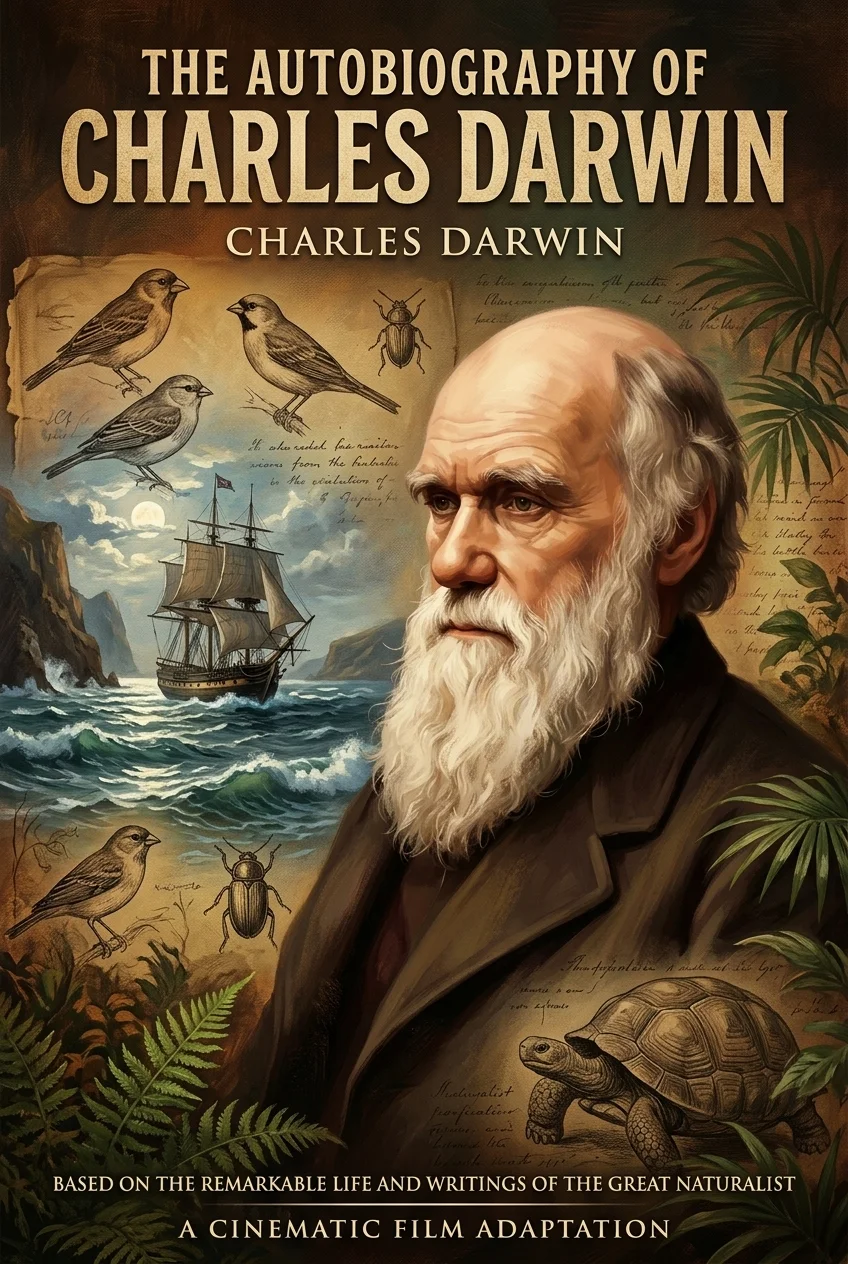
- The Autobiography of Charles Darwin (1887): A candid, posthumously published reflection on his life, his intellectual development, and his unwavering commitment to the scientific method.