1871 - 1945
Theodore Dreiser (b. 1871) is an American novelist and journalist who stands as a towering figure of the American literary naturalism movement. His unflinching portrayals of American society and industrial capitalism challenged conventional Victorian morality and permanently reshaped modern fiction.
Born in Terre Haute, Indiana, Dreiser grew up in a strict, impoverished immigrant household that deeply influenced his worldview regarding poverty, ambition, and social class. He worked as a journalist for various newspapers in Chicago, St. Louis, and New York before turning his keen observational skills toward fiction. His breakthrough came with the publication of his controversial debut novel, Sister Carrie, in 1900, which publishers initially suppressed for its frank depiction of moral ambiguity.
Throughout his prolific career, Dreiser drew heavily from his own struggles, the harsh realities of urban life, and real-life criminal cases to build his sprawling narratives. He became an outspoken social and political activist later in life, advocating for labor rights and joining the Communist Party shortly before his death in Hollywood, California, in December 1945. His complex characters trapped by deterministic social forces established a new benchmark for psychological realism in American literature.
Essential Reading
- Sister Carrie (1900): A sweeping tragedy following a young rural woman who moves to Chicago and New York to pursue the American dream, navigating exploitation and moral compromise.
- Jennie Gerhardt (1911): A poignant examination of class disparity and societal judgment centered on a working-class woman who becomes entangled with wealthy men.
- The Financier (1912): A gripping study of ruthless ambition and capitalistic drive based on the life of traction magnate Charles Yerkes.
- The Titan (1914): A continuation of Frank Cowperwood's relentless rise through the high-stakes worlds of finance and urban politics in Chicago.
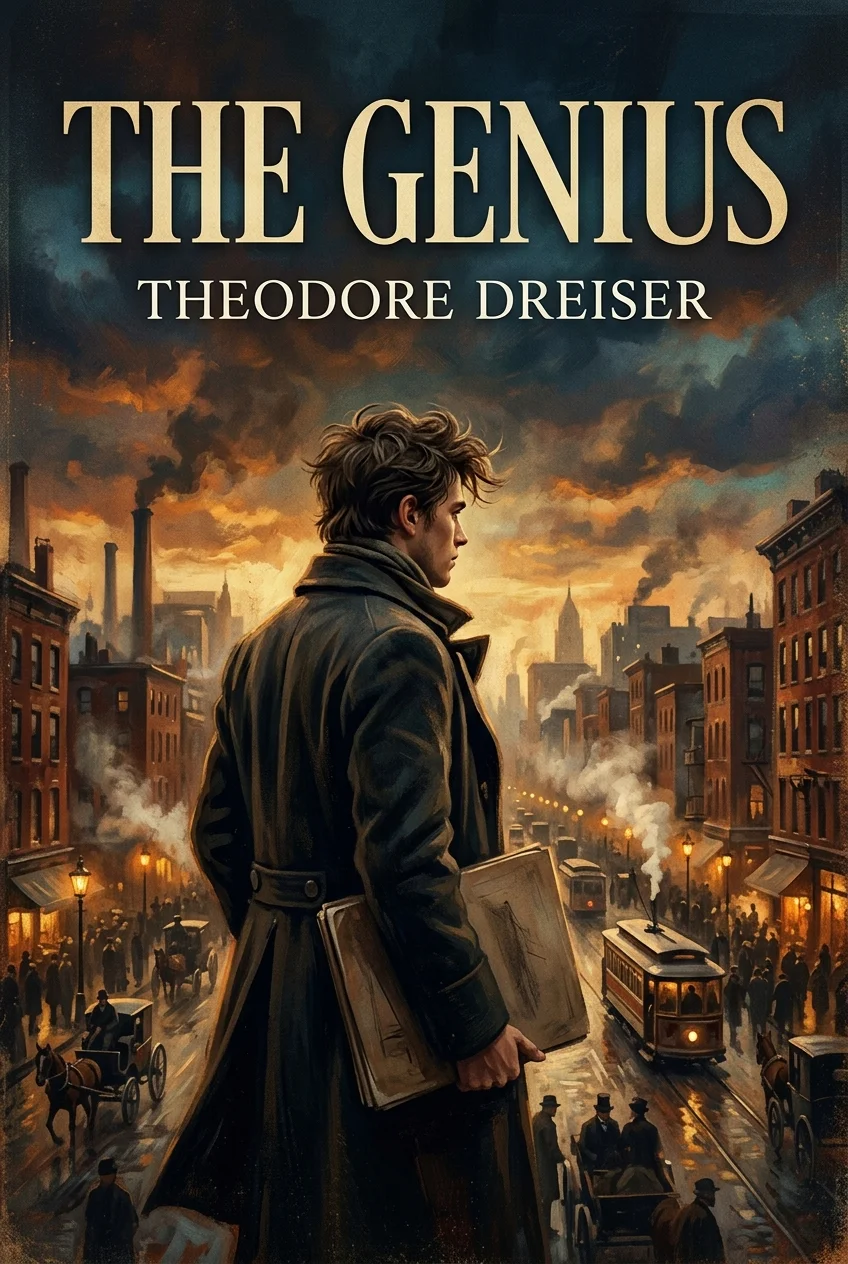
- The Genius (1915): An introspective novel exploring the agonizing friction between artistic integrity, commercial success, and romantic obsession.
- An American Tragedy (1925): A monumental masterpiece that meticulously dissects ambition, murder, and the dark underbelly of the American pursuit of wealth.
- Twelve Men (1919): A fascinating collection of biographical sketches reflecting the diverse, eccentric, and colorful characters Dreiser encountered throughout his life and career.