1867 - 1899
Sheikh Najib Suleiman Al-Haddad (1867–1899 AD) was a Lebanese journalist, translator, poet, and playwright, considered one of the most prominent pioneers of the literary Renaissance (Nahda) and key pillars of modern Arab theater in the nineteenth century. He was distinguished by his early genius, and despite his premature death at the age of thirty-two, he left behind a legacy that propelled the Arab theatrical movement significantly forward.
He was born in the city of Beirut in 1867 AD and grew up in an exceptional cultural environment; his father was the poet Suleiman Al-Haddad, and his maternal grandfather was the pioneer of the Renaissance, Sheikh Nasif Al-Yaziji. He learned the fundamentals and rhetoric of the Arabic language from his maternal uncles, the men of letters Ibrahim and Khalil Al-Yaziji, and his maternal aunt, the poet Warda Al-Yaziji. He studied at the Frères School in Beirut before moving with his family to Alexandria, Egypt, where he attended the American School, mastering French and English alongside Arabic.
He began his career early, working as an editor and translator for the Egyptian newspaper Al-Ahram. In 1894, he co-founded the newspaper Lisan Al-Arab in Alexandria with his brother Amin Al-Haddad, and also published the daily newspaper Al-Salam. Furthermore, he contributed to editing the women's magazine Anis Al-Jalis from its inception in 1898, becoming known for advocating women's causes, defending their rights, and promoting their education. He advanced Arab theater through innovative original playwriting and by adapting Western masterpieces to suit Oriental taste, before suffering from severe emaciation and exhaustion and passing away in Alexandria in 1899 AD.
Major Works
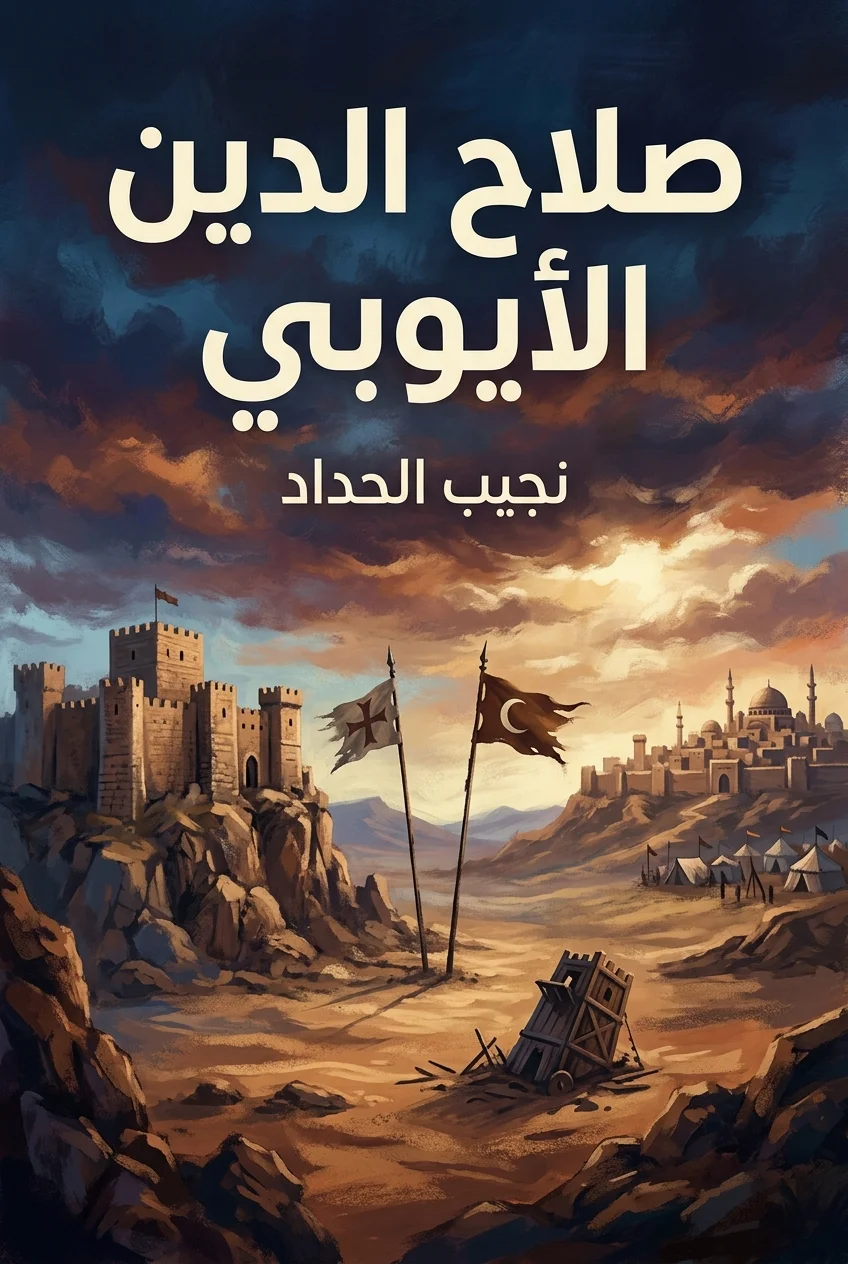
- Salah ad-Din al-Ayyubi (Saladin): A famous historical play that achieved resounding success on the stages of Egypt and Lebanon, considered one of his most prominent theatrical works.
- Shuhada' al-Gharam (Martyrs of Love): A play adapted from masterpieces of world literature, tailored to fit Oriental taste.
- Tha'arat al-Arab (Revenge of the Arabs): An original play reflecting his pioneering role in developing Arab theater.
- Hamdan: An innovative play considered one of his prominent theatrical works.
- Shahamat al-Arab (Chivalry of the Arabs): A play inspired by Arab heritage and crafted in his developed theatrical style.
- Al-Sayyid (Le Cid): A play he adapted into Arabic from the French playwright Corneille.
- Al-Fursan al-Thalatha (The Three Musketeers): A classic novel he adapted into Arabic from the writer Alexandre Dumas.
- Tidhkar al-Siba (Remembrance of Youth): A poetry collection gathering his emotional and nationalistic poems.