Book Catalog
From the Earth to the Moon

From the Earth to the Moon

Jules Verne

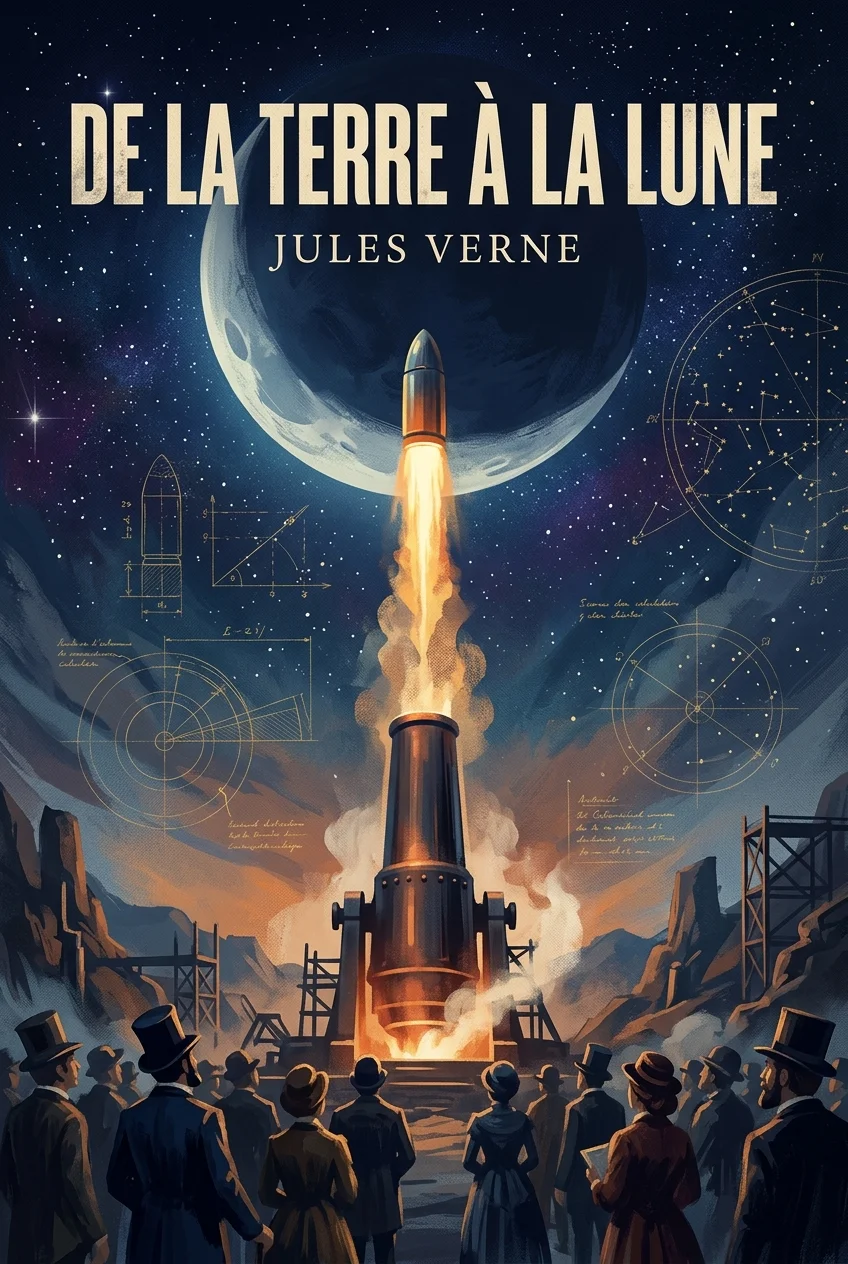
In the aftermath of the American Civil War, the Gun Club—a society of bored artillerymen—conceives an audacious plan: fire a projectile to the Moon using an enormous cannon. Jules Verne’s pioneering hard‑science fiction follows the meticulous engineering, international subscription, and fiery rivalry between Florida and Texas for the launch site. When the romantic French adventurer Michel Ardan insists on riding inside the shell, the project transforms from a ballistic test into a human voyage.

Genre: Science Fiction
Language: English
Format: WebBook, eBook
Join Free

Start Reading

Sign up for free to access this book.

About the Author

Jules Verne

Jules Verne

1828 - 1905

Jules Gabriel Verne (1828-1905) was a globally renowned French writer, considered one of the founding fathers of science fiction. Through his adventure novels, he captured the imagination of generations of readers by anticipating the technological advancements of his era. His monumental work, gathered under the title of the Extraordinary Voyages, celebrates scientific progress and the human spirit of exploration.

Born in Nantes in 1828, he grew up near the Loire, a maritime environment that very early on nurtured his taste for escape and travel. Although his father intended him for a legal career in Paris, he quickly abandoned law to dedicate himself to theater and literature in the early 1850s. His decisive meeting with the publisher Pierre-Jules Hetzel in 1862 marked the beginning of a legendary collaboration that would definitively launch his writing career.

Living during the Industrial Revolution, Verne drew inspiration from the discoveries of the late nineteenth century to construct his plots. His voyages aboard his own boats and his crossing of the Atlantic Ocean greatly enriched the technical realism of his maritime narratives. Settling in Amiens from 1871, he continued a prolific literary production there until his death in 1905, leaving behind a universal cultural legacy.

Essential Readings

  • A Voyage in a Balloon (1852): This short aeronautical adventure story lays the groundwork for the author's style, blending technical rigor with dramatic suspense.
  • Journey to the Center of the Earth (1864): Audacious explorers descend into the depths of the globe, discovering a fascinating prehistoric world beneath the Earth's crust.
  • Around the Moon (1869): This pioneering work describes the orbital journey of three adventurers and astonishingly accurately foreshadows modern space exploration.
  • Twenty Thousand Leagues Under the Seas (1870): The mysterious Captain Nemo guides his guests aboard the Nautilus on an unforgettable underwater odyssey through the oceans.
  • A Floating City (1871): Inspired by the author's crossing on the Great Eastern, this novel depicts modern life aboard a gigantic transatlantic liner.
  • Around the World in Eighty Days (1872): The eccentric English gentleman Phileas Fogg takes on the crazy bet of circumnavigating the globe in record time.
  • An Antarctic Mystery (also known as The Sphinx of the Ice Fields) (1897): This polar adventure story plunges the reader into the icy and terrifying mysteries of Antarctica, serving as a sequel to Edgar Allan Poe's work.
Read more about the author

More from this Author

More in Science Fiction

Top Read This Month

Top Read All Time