Daniel Defoe
c. 1660 – 1731
English
1 bookBiography
Daniel Defoe (b. 1660) was an English writer, journalist, merchant, and intelligence agent who is widely regarded as one of the primary founders of the English novel. His prolific career produced hundreds of books, political pamphlets, and journals spanning social commentary, crime, travel, and economics. He achieved enduring literary prominence by pioneering a realistic style of prose narrative that depicted the psychology and material struggles of everyday individuals.
Born into a family of nonconformist Presbyterians in London, Defoe received an education at a dissenting academy rather than Oxford or Cambridge, which excluded religious dissenters. He engaged in various merchant ventures across Europe that repeatedly led to financial ruin, and he participated actively in contemporary politics, including joining the Monmouth Rebellion in 1685. In 1703, the government arrested and pilloried him for his subversive satirical pamphlet The Shortest-Way with the Dissenters, after which statesman Robert Harley recruited him to operate as an undercover informant and political propagandist.
These varied experiences with debt, deception, statecraft, and social marginalization provided the raw material and pragmatic worldview that shaped his later creative endeavors. Approaching the age of sixty, Defoe turned his talents toward extended narrative fiction, achieving immediate and lasting commercial success with tales of adventure, crime, and historical catastrophe. He continued writing vigorously until his final years, profoundly influencing the development of realistic narrative fiction in Britain before dying in London in 1731.
Essential Reading
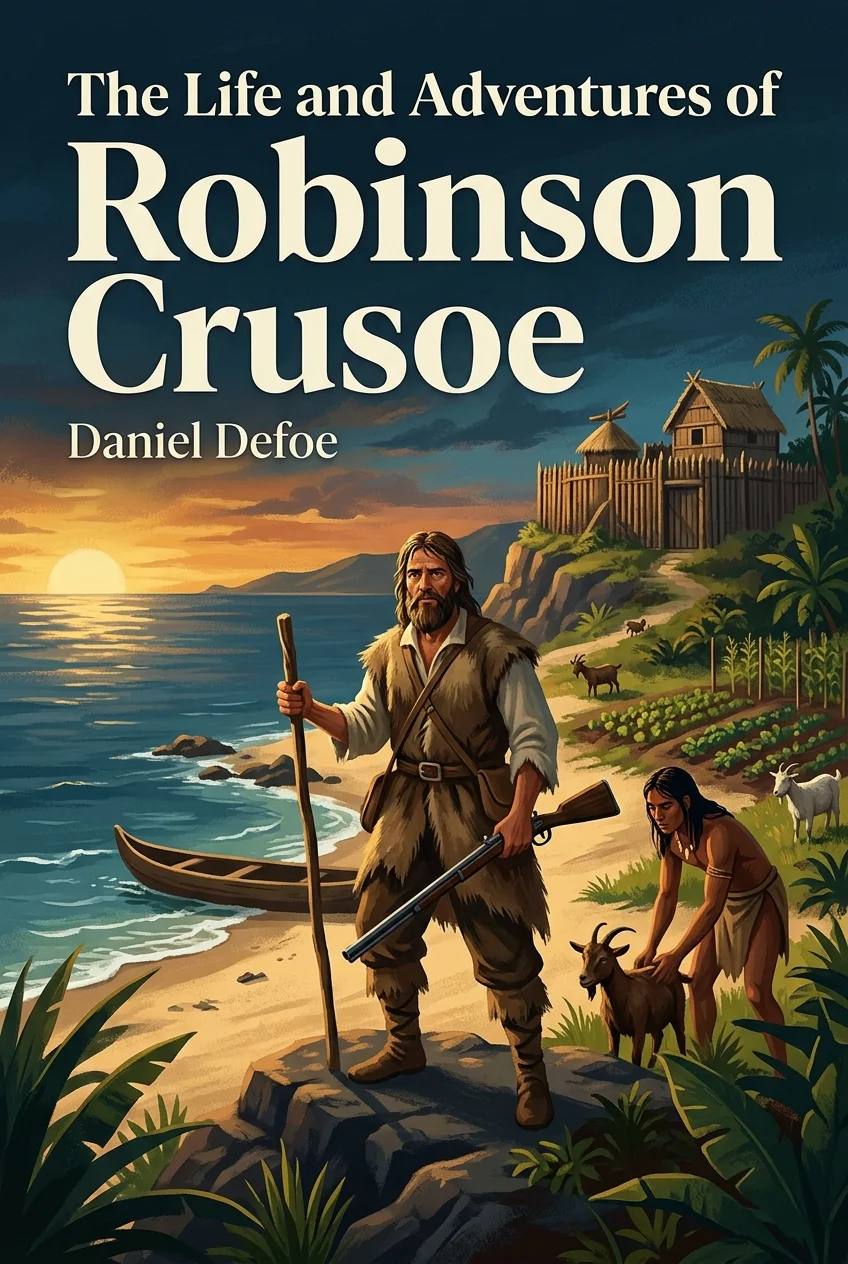
- The Life and Adventures of Robinson Crusoe (1719): This pioneering adventure narrative details the twenty-eight years an English castaway spends on a deserted tropical island, establishing enduring literary themes of resilience, spiritual reflection, and individual resourcefulness.
- Moll Flanders (1722): Framed as a confessional autobiography, this picaresque novel charts the tumultuous life, crimes, and eventual moral reformation of an impoverished woman struggling to survive in seventeenth-century England and Virginia.
- A Journal of the Plague Year (1722): This meticulously crafted chronicle provides a gripping, documentary-style account of the Great Plague of 1665, capturing the panic, societal breakdown, and tragic human cost of the epidemic across London.