Reinhart Dozy
1820 – 1883
Dutch
1 bookBiography
Reinhart Pieter Anne Dozy (b. 1820) was a distinguished Dutch Orientalist, historian, and professor who made foundational contributions to the study of Arabic lexicography and Islamic history in medieval Spain. He served for many years as a professor of history at Leiden University, where he specialized in the textual analysis of classical Arabic manuscripts. His scholarly endeavors established him as one of Europe's premier nineteenth-century authorities on Al-Andalus and classical Islamic civilization.
Born in Leiden to a family of French Huguenot origin, Dozy studied history and Oriental languages at Leiden University, receiving his doctorate in 1844. He joined the university's academic faculty in 1850 and spent decades examining rare manuscripts across European libraries to reconstruct the political and social dynamics of Muslim Iberia. His rigorous critical methodology and profound knowledge of the Arabic language enabled him to produce groundbreaking historical narratives that transformed Western perceptions of medieval Islamic governance.
Beyond his regional historical focus, Dozy compiled monumental reference tools that expanded the boundaries of Arabic philology, including specialized dictionaries of post-classical Arabic vocabulary. His detailed investigations into religious developments, dynastic shifts, and social structures provided lasting frameworks for subsequent scholarship. Through his extensive research and publications, Dozy significantly advanced the academic discipline of Islamic studies in Europe and left an enduring intellectual legacy.
Essential Reading
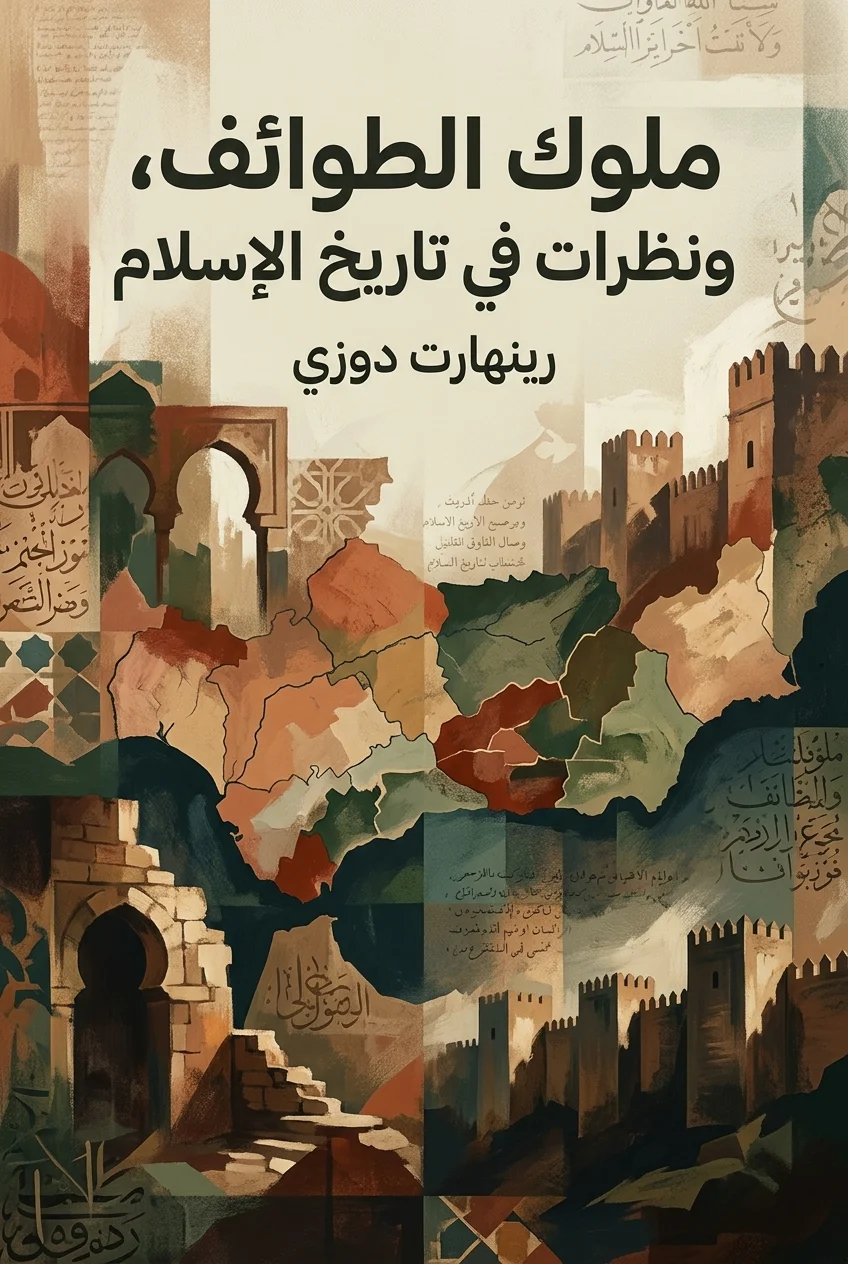
- History of the Taifa Kings (Muluk al-Tawa'if) (1881): A detailed historical investigation into the political fragmentation, rise, and fall of the independent petty Muslim kingdoms that emerged in medieval Spain after the collapse of the Caliphate of Cordoba.
- Views on the History of Islam (Nazarat fi Tarikh al-Islam) (1879): A comprehensive examination evaluating the historical evolution, social structures, and religious developments of Islamic civilization from its inception through the medieval period.
- Supplement to Arabic Dictionaries (1881): A monumental lexicographical work documenting post-classical and Andalusian Arabic terms, serving as an essential reference for Arabic language scholars worldwide.