

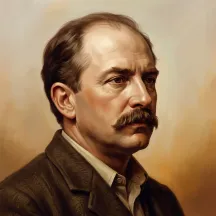
Frank Norris
1870 – 1902
American
1 bookBiography
Benjamin Franklin Norris Jr. (b. 1870) is an American novelist and journalist who stands as a prominent figure in the literary movement of naturalism. His gritty, realistic portrayals of human struggle and corporate greed left a lasting mark on American literature at the turn of the twentieth century.
Born in Chicago, Illinois, Norris moved with his family to San Francisco in 1884, a city that would profoundly influence much of his fiction. He studied art in Paris before attending the University of California, Berkeley, and later Harvard University, where he began developing his distinctive writing style under the influence of French realism. Working as a war correspondent during the Spanish-American War, he witnessed firsthand the harsh realities of conflict, which further sharpened his keen observational powers.
As a leading voice in American literary naturalism, Norris focused his writing on the powerful forces of heredity, environment, and economic systems that shape human lives. His ambitious Epic of the Wheat trilogy aimed to examine the production, distribution, and consumption of American grain through sweeping, socially conscious narratives. Although his career was cut short by his untimely death, his pioneering novels continue to be studied for their unflinching examination of industrial capitalism.
Essential Reading
- Moran of the Lady Letty (1898): This gripping sea adventure follows a San Francisco socialite who is shanghaied onto a schooner and transformed by the brutal realities of maritime life.
- McTeague (1899): This dark psychological novel chronicles the tragic downfall of an unlicensed San Francisco dentist driven to ruin by greed, jealousy, and hereditary flaws.
- The Octopus (1901): This powerful epic dramatizes the bitter and violent conflict between California wheat growers and a monopolistic railroad corporation.
