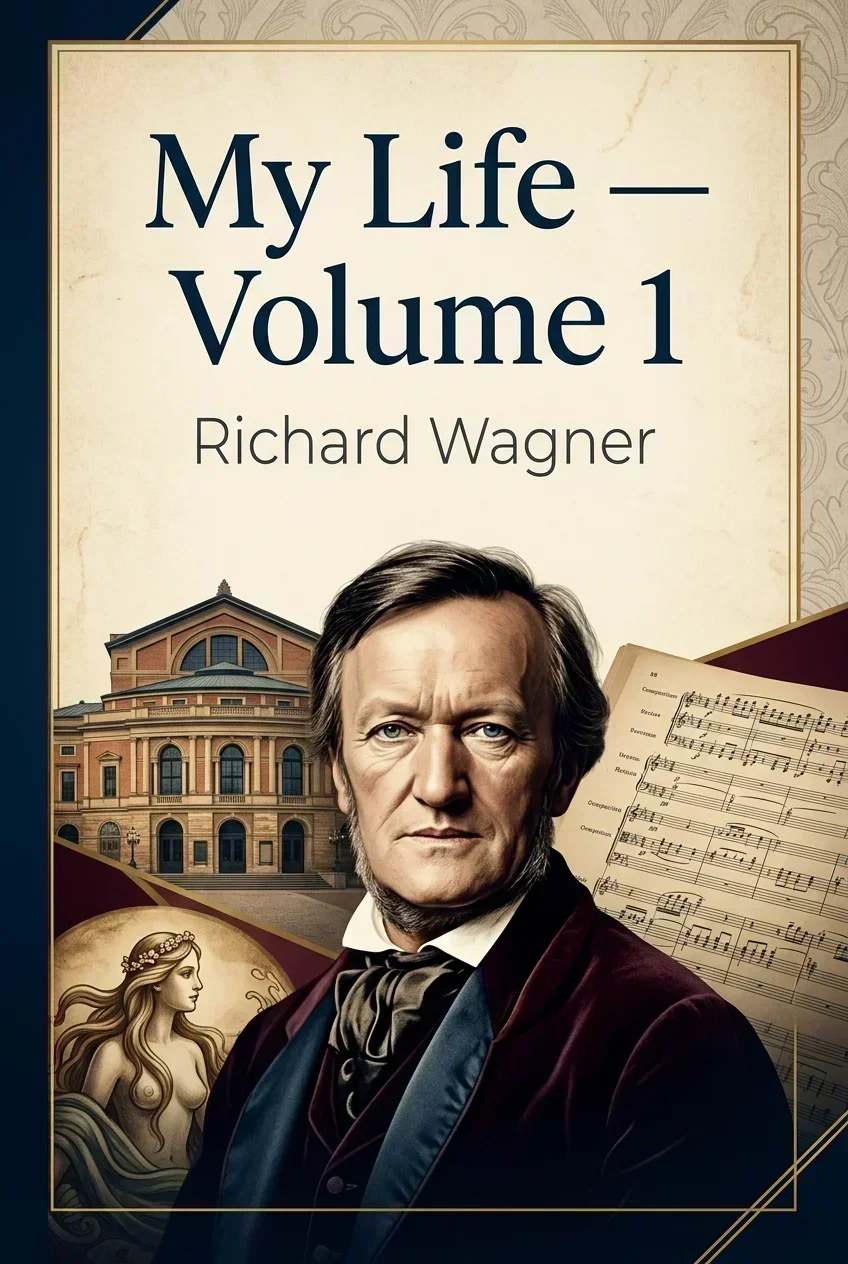
Richard Wagner
1813 – 1883
German
1 bookBiography
Richard Wagner (1813–1883) was a titanic, fiercely polarizing figure in 19th-century German art whose influence spilled far beyond the opera house to permanently alter modern literature, philosophy, and theater. Unlike most composers of his era, Wagner wrote both the music and the intricate, poetic librettos for all his stage works. He championed the radical concept of the Gesamtkunstwerk, or "total work of art," seeking to seamlessly synthesize poetry, visual arts, and music into a single, overwhelming dramatic experience.
Drawing heavily on Germanic folklore, Norse sagas, and Arthurian legends, his sweeping, mythic narratives explore complex themes of power, destiny, and redemption. While his personal legacy remains deeply marred by his virulent antisemitism and extreme nationalism, his artistic innovations fundamentally reshaped Western culture. Writers ranging from Thomas Mann to James Joyce and J.R.R. Tolkien were profoundly influenced by his psychological depth, world-building, and literary use of the leitmotif. For the literary reader, Wagner stands as a formidable dramatic poet and a highly influential cultural philosopher.
Essential Reading
The Ring of the Nibelung (Libretto published 1853): His monumental, four-part epic cycle—often read as a sprawling, complex dramatic poem—that revolutionized fantasy storytelling and the modern treatment of myth.
- Tristan and Isolde (1859): A passionate, philosophical libretto exploring obsessive, tragic love and existential pessimism, heavily influenced by Arthur Schopenhauer and medieval romance.
- Opera and Drama (1851): His most extensive, demanding, and influential theoretical book, detailing his fierce critique of contemporary art and his radical vision for the future of theater.
- Parsifal (1882): His final work, a deeply mystical, highly symbolic dramatic text that wrestles with compassion, asceticism, and religious redemption through the lens of the Holy Grail legend.