Louisa May Alcott
1832 – 1888
American
1 bookBiography
Louisa May Alcott (1832–1888) grew up in the intellectual heart of 19th-century New England, surrounded by towering transcendentalist thinkers like Ralph Waldo Emerson and Henry David Thoreau. However, her visionary father's chronic inability to provide for his family forced Alcott to become their primary breadwinner at a young age. Driven by fierce independence and pragmatic necessity, she worked as a teacher, a seamstress, and a Civil War nurse. To pay off family debts, she even spent years writing highly lucrative, sensational gothic thrillers under a pseudonym.
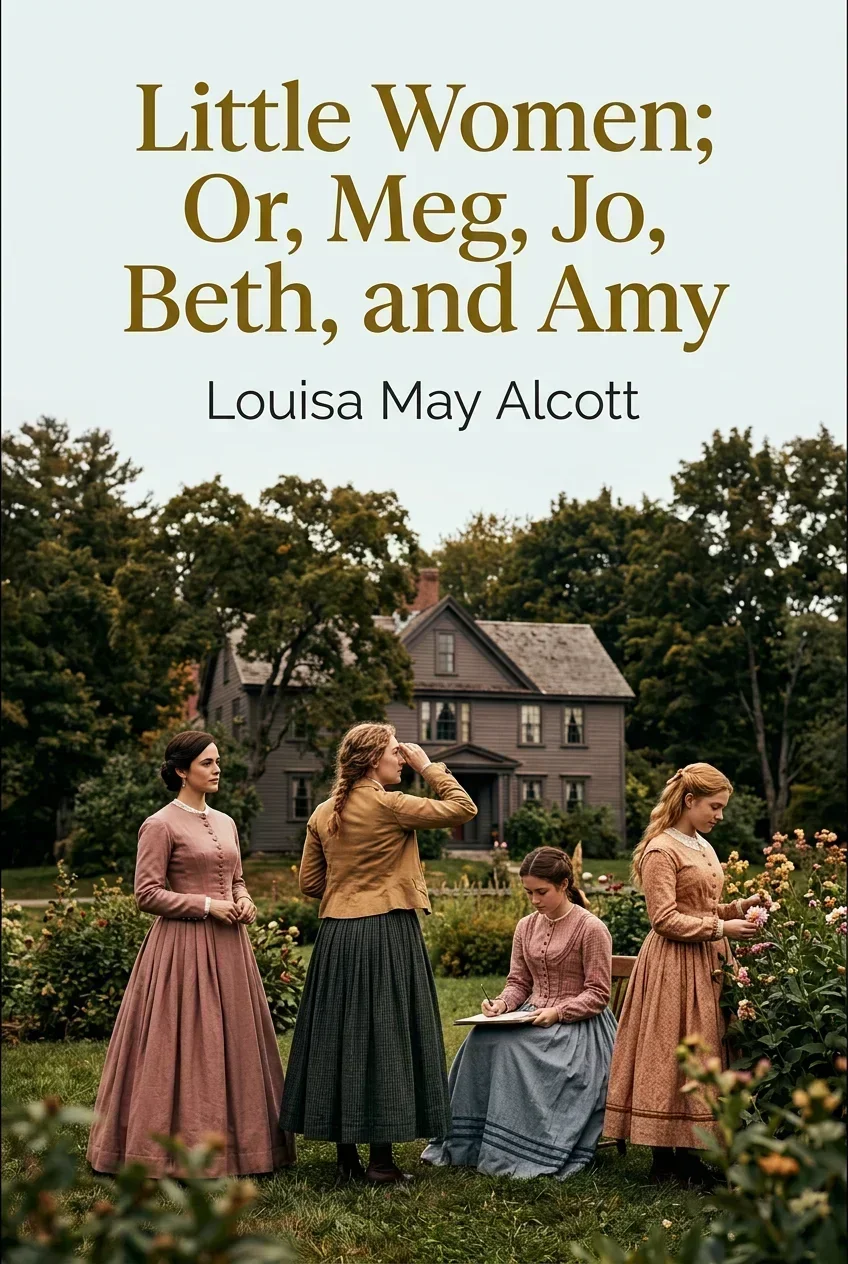
Her life and literary legacy changed permanently when a publisher asked her to write a "girls' story." Drawing directly from her own lively, impoverished childhood alongside her three sisters in Concord, Massachusetts, Alcott drafted Little Women in a matter of weeks. The novel was an unprecedented, runaway success that completely revolutionized domestic fiction. By presenting young women who were intellectually ambitious, realistically flawed, and deeply relatable, Alcott created a blueprint for modern young adult literature and gave generations of readers a feminist icon in the fiery, uncompromising writer Jo March.
Essential Reading
- Little Women (1868): Her defining, deeply beloved masterpiece following the coming-of-age journeys, heartbreaks, and ambitions of the four March sisters during the American Civil War.
- Little Men (1871): The chaotic, heartwarming sequel that follows an adult Jo March as she and her husband run the progressive, highly unconventional Plumfield Estate School for boys.
- Hospital Sketches (1863): A gripping, lightly fictionalized memoir based on her letters home during her intense, six-week stint working as a Union nurse in a Washington, D.C. hospital.
- An Old-Fashioned Girl (1870): A sharp, charming social novel that heavily contrasts the sensible, grounded values of a country girl with the wealthy, superficial excess of Boston high society.