Lewis Carroll
1832 – 1898
English
1 bookBiography
Lewis Carroll (1832–1898) the pen name of Charles Lutwidge Dodgson, led a fascinating double life. By day, he was a quiet, stammering Oxford mathematician, logician, and pioneering photographer. But in his imagination, he was the brilliant architect of the most famous and enduring works of literary nonsense in the English language. The trajectory of children's literature changed forever on a golden summer afternoon in 1862, when Dodgson rowed a boat down the River Thames and improvised a fantastical story for three young sisters, one of whom was named Alice Liddell.
When he finally published Alice's Adventures in Wonderland, it caused a quiet revolution. Victorian children's books were traditionally heavy-handed, designed to deliver strict moral lessons and frighten children into good behavior. Carroll dispensed with all of that. Instead, he used his mathematical mind to turn logic upside down, creating a subversive, endlessly playful world where authority figures are ridiculous, rules are arbitrary, and language itself is a joyful, shifting puzzle. Today, his surreal dreamscapes continue to captivate both children and scholars alike.
Essential Reading
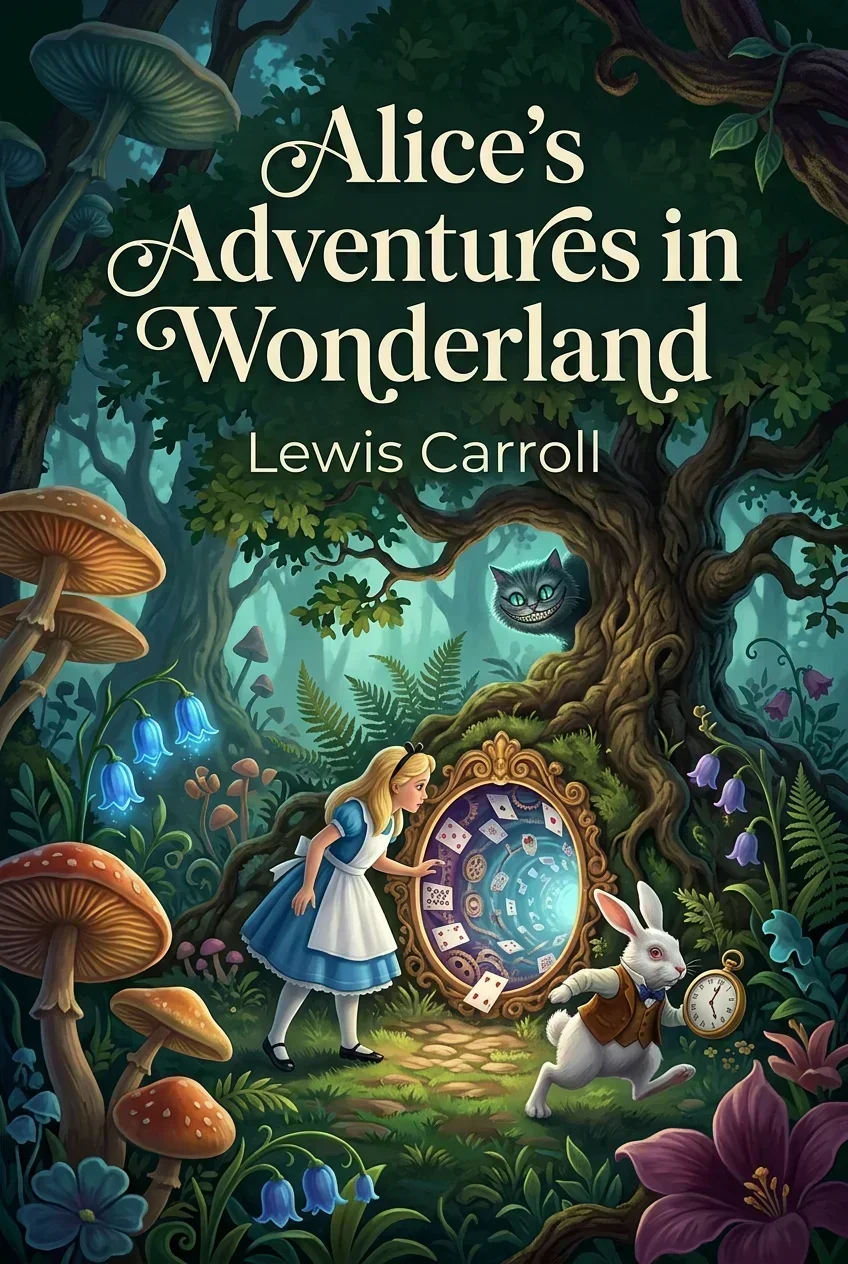
- Alice's Adventures in Wonderland (1865): His revolutionary masterpiece detailing young Alice's plunge down a rabbit hole into a bizarre, unforgettable world of Mad Hatters, grinning cats, and tyrannical queens.
- Through the Looking-Glass, and What Alice Found There (1871): The slightly darker, chess-themed sequel to Wonderland, featuring the famous mirror-world inversions and the debut of the iconic nonsense poem, "Jabberwocky."
- The Hunting of the Snark (1876): A brilliant, epic nonsense poem following the absurd and increasingly perilous sea voyage of a bizarre crew attempting to hunt an entirely unimaginable creature.