Jonathan Swift
1667 – 1745
Irish
2 booksBiography
Jonathan Swift was an Anglo-Irish satirist, essayist, and cleric (1667 to 1745). Jonathan Swift was the undisputed master of prose satire in the English language and a formidable figure of the Augustan Age. As the Dean of St. Patrick's Cathedral in Dublin, he occupied a precarious position, navigating the high-stakes political intrigues of London while serving as a fierce, often reluctant champion for the oppressed people of Ireland. His writing was never a mere literary exercise; it was a surgical strike against political corruption and the intellectual vanity of the Enlightenment, delivered with a wit so razor-edged that it frequently bordered on a profound misanthropy.
Swift’s intellectual legacy is anchored in his unparalleled command of irony and his invention of the "modest" persona to mask devastating social critiques. He dismantled the human condition by exposing the grotesque gap between man’s rational pretensions and his baser, more absurd realities. He remains the patron saint of the polemic, using biting humor to force his readers to confront the moral decay of their institutions. His work served as a necessary corrective to the era's optimism, suggesting that without self-awareness, human reason was simply a tool for more sophisticated folly.
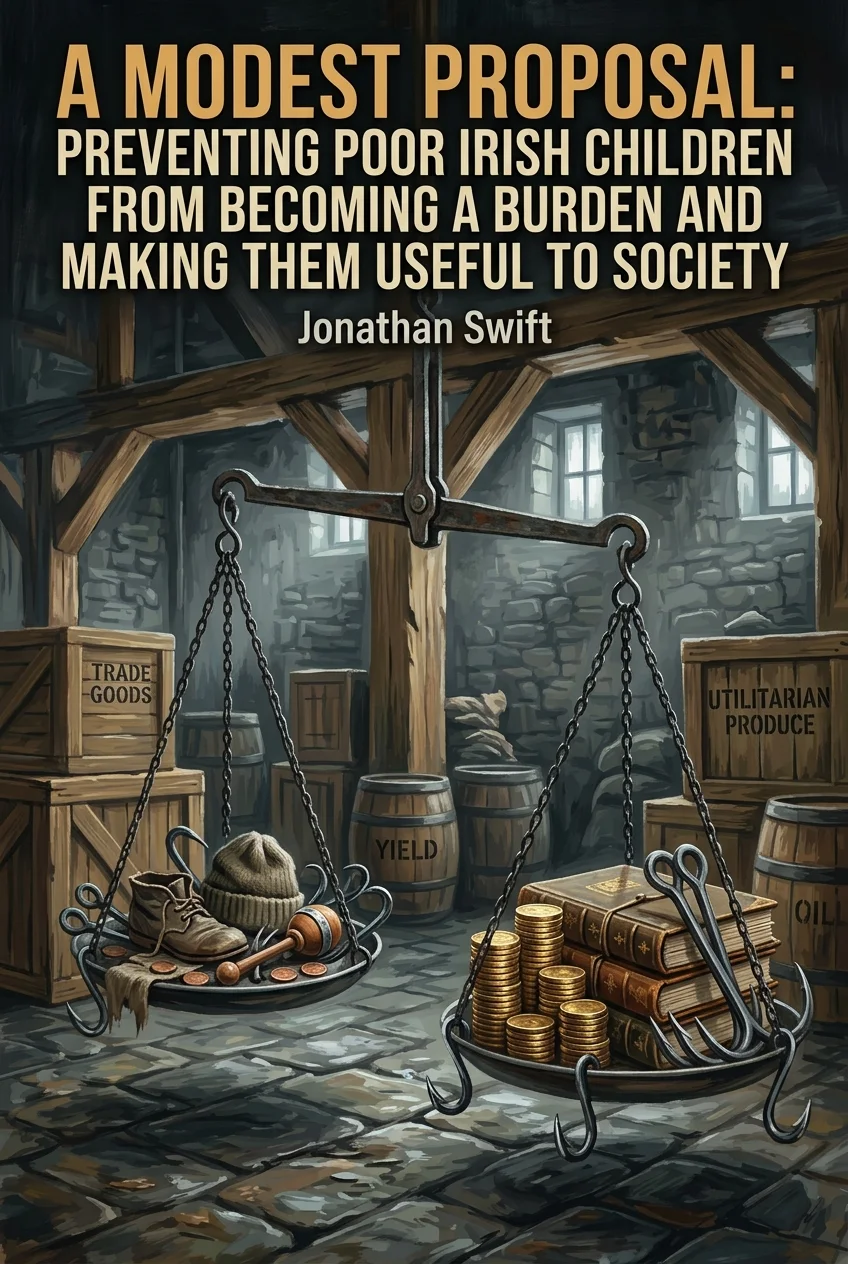
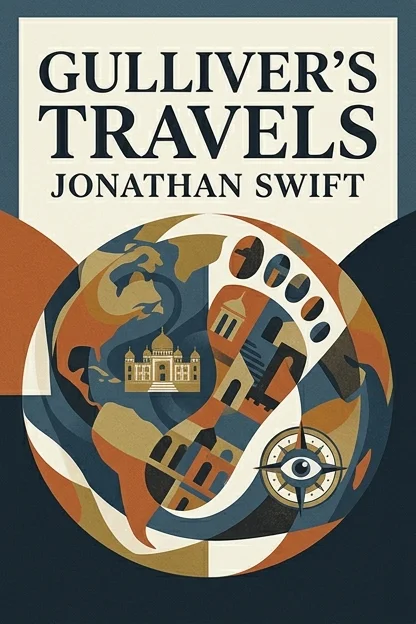
His prose remains a model of clarity and deceptive simplicity, hiding deep layers of philosophical complexity beneath a surface of straightforward narrative. His most acclaimed masterpieces include Gulliver’s Travels (1726), a definitive social satire that traverses the boundaries of logic and scale, A Modest Proposal (1729), an unparalleled work of satirical indignation, A Tale of a Tub (1704), and The Journal to Stella (1710–1713).