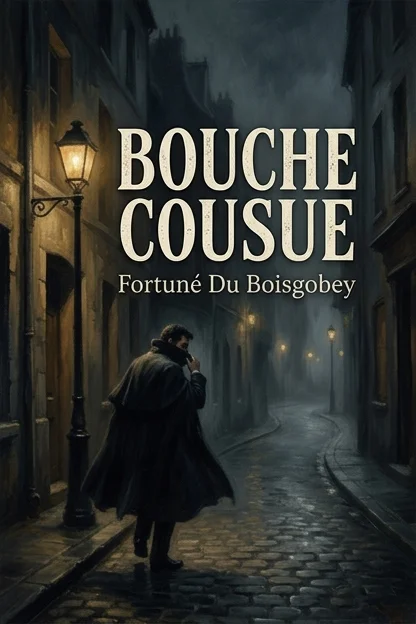
Fortuné du Boisgobey
1821 – 1891
French
1 bookBiography
Fortuné Du Boisgobey (1821–1891) picked up the torch of the French detective novel when the genre was still in its infancy. Originally a paymaster in the French army, he spent years traveling through Algeria and Italy before settling in Paris to pursue a literary career. He emerged as the natural successor to Émile Gaboriau, the father of the police procedural. In fact, Du Boisgobey was so well-regarded that he was eventually authorized by Gaboriau’s family to continue the adventures of the famous detective, Monsieur Lecoq.
He excelled in the roman-feuilleton—novels published in daily installments in newspapers. This format demanded high stakes and constant momentum, as every chapter had to end on a cliffhanger to ensure readers bought the next day's edition. Du Boisgobey’s stories focused on the dark underbelly of Parisian high society, filled with hidden identities, stolen inheritances, and elaborate crimes. While he favored sensationalism over the cold, scientific logic that would later define Sherlock Holmes, his work acted as a vital bridge between the gothic mysteries of the past and the modern thriller.
Essential Reading
- Le Crime de l’Opéra (The Crime of the Opera) (1880): His most famous work, a quintessential Parisian mystery involving a high-profile murder that exposes the scandals and secrets of the city's elite.
- La Main froide (The Cold Hand) (1879): A gripping mystery that showcases his ability to weave complex plots and maintain suspense through atmospheric, shadowy settings.
- L’Affaire Matapan (The Matapan Affair) (1881): A classic example of his crime fiction, centering on a complicated legal and criminal investigation that keeps the reader guessing until the final installment.
- Le Demi-Monde sous la Terreur (The Underworld under the Terror) (1877): An intriguing blend of historical fiction and crime, set during the French Revolution, illustrating how chaos and political upheaval provide the perfect cover for criminal activity.
- Le Billet rouge (The Red Ticket) (1884): A fast-paced narrative involving high-stakes gambling, social ruin, and the desperate measures individuals take when trapped by debt and obsession.