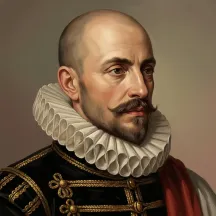
Étienne de La Boétie
1530 – 1563
French
1 bookBiography
Étienne de La Boétie (b. 1530) is a French philosopher, jurist, and writer who stands as a foundational figure in the development of modern political thought. He is widely recognized for his profound exploration of the nature of tyranny and the psychological mechanisms that sustain political oppression.
Born in Sarlat, France, La Boétie pursues a distinguished career in law, eventually serving as a counselor at the Parlement of Bordeaux. During his studies at the University of Orléans, he forms a deep and intellectually transformative friendship with the essayist Michel de Montaigne. This intellectual partnership significantly influences his philosophical outlook and fosters his commitment to humanistic inquiry and civic virtue.
His work emerges during the tumultuous period of the French Wars of Religion, a time of intense political and social upheaval. La Boétie examines the paradox of why large populations submit to the rule of a single tyrant, arguing that power is ultimately granted by the consent of the governed. His analytical approach provides a critical framework for understanding civil disobedience and the voluntary nature of political servitude, themes that continue to resonate in contemporary political theory.
Essential Reading
- Discourse on Voluntary Servitude (Discours de la servitude volontaire) (1574): This influential treatise investigates the origins of tyranny and posits that the power of a ruler relies entirely upon the willing submission of the people.
- Memoir on the Edict of January (Mémoire touchant l'édit de janvier 1562) (1562): This work offers a reasoned plea for religious tolerance and civil peace during the escalating conflicts of the sixteenth century.