Bram Stoker
1847 – 1912
Irish
2 booksBiography
Bram Stoker (1847–1912) was an Irish author whose name became synonymous with the most enduring monster in literary history. A sickly child who spent much of his early life bedridden in Dublin, Stoker developed a deep fascination with Irish folklore and the macabre, which likely seeded his later explorations of illness, blood, and the boundaries of life and death. Despite his later fame as a writer, he spent most of his professional life in the shadow of the great Victorian actor Henry Irving, serving as Irving's personal assistant and the business manager of London's Lyceum Theatre.
It was in the late-night hours after theater performances that Stoker crafted his masterpiece, Dracula. While he didn't invent the vampire, he synthesized disparate European myths and contemporary Victorian anxieties—such as the fear of "reverse colonialism" and the clash between ancient superstition and modern science—into a terrifyingly cohesive legend. Using an intricate epistolary style, Stoker allowed the horror to unfold through a fragmented collection of diary entries, telegrams, and ship's logs, creating a sense of realism that made the supernatural feel dangerously plausible.
Essential Reading
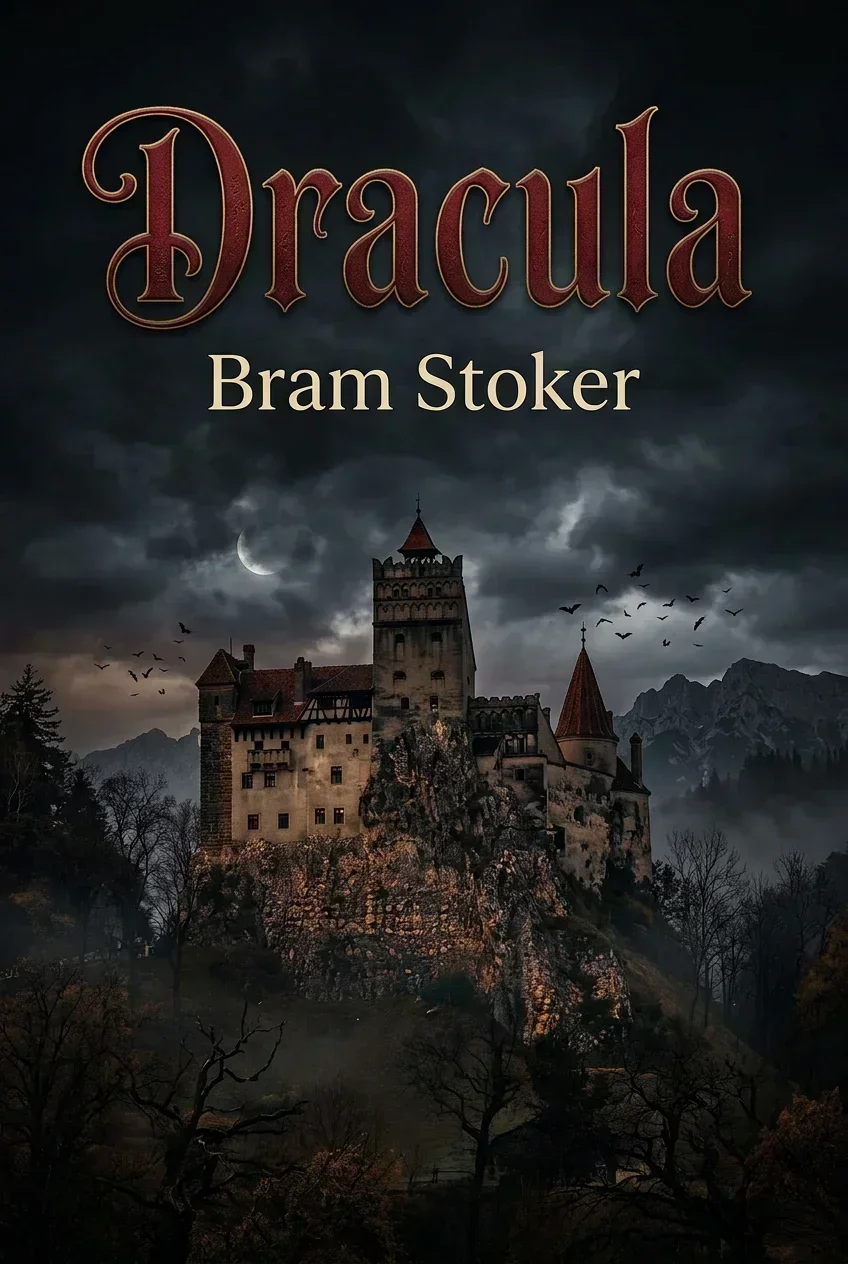
- Dracula (1897): The definitive gothic masterpiece. It chronicles the attempt by the Transylvanian Count Dracula to move to England to spread the undead curse, and the small group of men and women led by Professor Abraham Van Helsing who battle him.
- The Jewel of Seven Stars (1903): A pioneering work of "mummy horror" that explores archeological discovery, ancient Egyptian mysticism, and the terrifying consequences of attempting to resurrect the past.
- The Lair of the White Worm (1911): A bizarre, surreal, and deeply unsettling horror novel based on the legend of the Lambton Worm, dealing with ancient subterranean creatures and psychological manipulation.
- The Snake's Pass (1890): His only novel set in his native Ireland. While less supernatural than his later work, it is a rich, atmospheric romance involving a hidden treasure and the rugged landscapes of County Mayo.
The Guest of Dracula and Other Weird Stories (Published posthumously, 1914): A collection of short fiction, including the title story which was originally intended as a deleted opening chapter of Dracula.