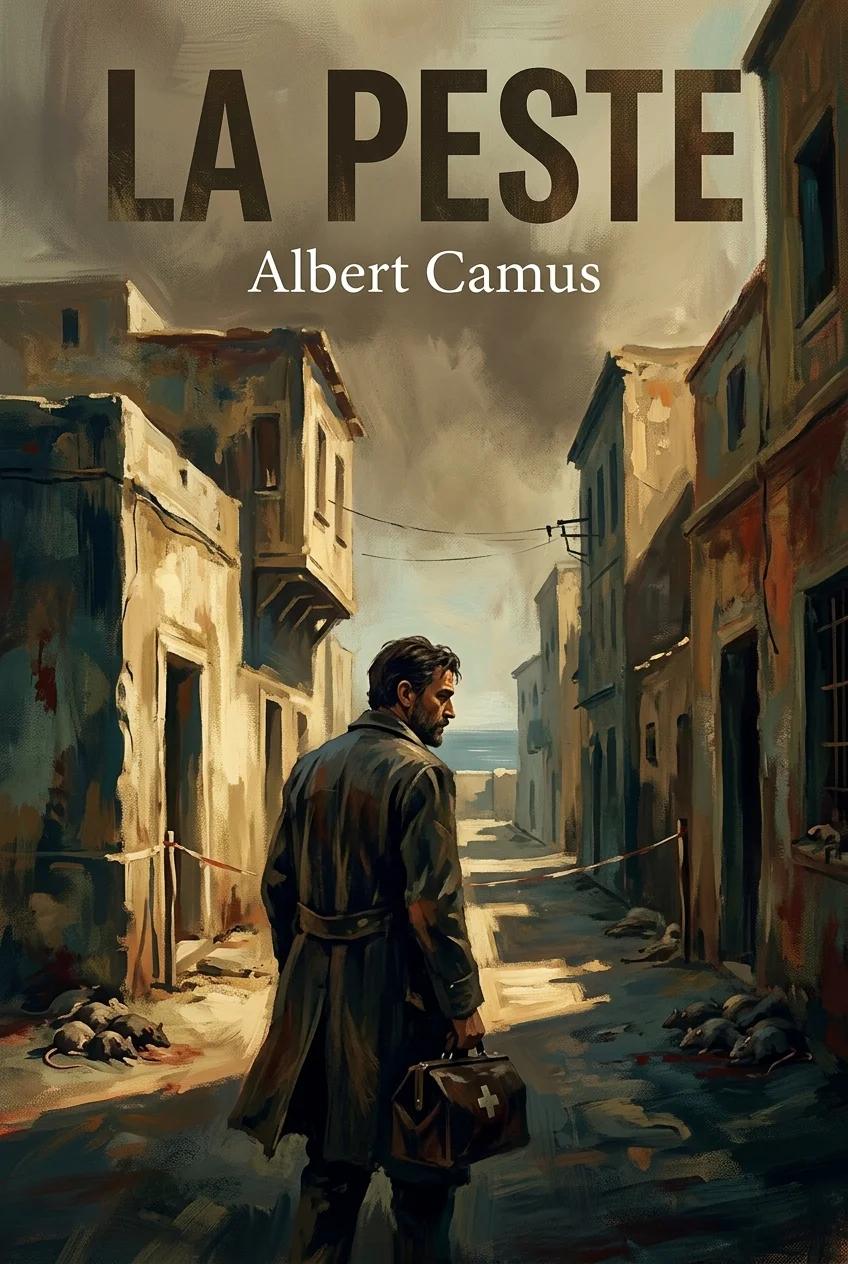
Albert Camus
1913 – 1960
French
3 booksBiography
French writer, philosopher, and journalist (1913 to 1960). Albert Camus was a pivotal figure in 20th-century thought and a recipient of the Nobel Prize in Literature. Born into a poor family in French Algeria, his humble beginnings and the sun-drenched landscapes of North Africa deeply influenced his literary voice. He spent his life navigating the tensions between the beauty of the physical world and the silence of a universe that offers no inherent meaning.
His intellectual legacy is centered on the philosophy of the Absurd. Camus argued that while humans have an innate drive to find order and purpose, the world remains indifferent to these desires. Rather than succumbing to despair, he advocated for a state of revolt. In this state, individuals find freedom by acknowledging the absurdity of existence and choosing to live with passion and integrity regardless. His work transitioned from the cold detachment of his early fiction to a more profound emphasis on human solidarity and the necessity of moral resistance against injustice.
Camus was a central figure in the French Resistance during World War II. He used his position as editor of the underground newspaper Combat to speak truth to power. His belief in individual conscience eventually led to a famous and public fracture with his contemporary Jean-Paul Sartre. Camus refused to justify political violence in the name of ideology, remaining a voice of moderation and humanism in an age of extremes.
His writing is celebrated for its clarity, its spare but evocative style, and its timeless exploration of the human condition. He mapped the struggles of the modern soul, suggesting that even in a world without absolute answers, there is a path toward dignity and joy.
His most acclaimed works include
- The Stranger (1942)
- The Myth of Sisyphus (1942), The Plague (1947)
- The Rebel (1951)
The posthumously published The First Man (1994).